By: Melany Millor Rodriguez
Photos courtesy of Herman Nadal
Just a few weeks ago, New York teased its first warm days of the spring. In the Big Apple, the shift from freezing temperatures to warmth occurs in real time – from sleeves pushed up on the subway, to linen replacing wool clothes, citygoers welcome a break from long coats and bags slipping off the glossy shoulders of puffer jackets. But beyond the surface, a more purposeful evolution is occurring in fashion right now. A shift that isn’t centered in New York at all.
It’s happening in Puerto Rico.
Just last month, I had the incredible opportunity to speak with the Boricua designer, Herman Nadal, whose work deeply resonated with me through our shared passion for representing Latino heritage. Upon speaking with Nadal, what amazed me was not just his work, but also the intention behind every detail. His starting point is direct and clear, bringing meaning to everything he crafts. “Fue un vacío que vi dentro de la misma isla,” it was a void he saw within the island itself he told me. “No veía ningún diseñador o ninguna marca inspirándose de tal forma que esa fuera la identidad completa y que fuera no solamente inspirado sino que fuera también creado en Puerto Rico,” [“I didn’t see any designer or brand drawing inspiration in such a way that it became their complete identity—one that was not only inspired by Puerto Rico but also created there”]. What started as a personal search for cultural understanding quickly transformed into something more expansive. Nadal noticed he was not just designing, but also educating through fashion.
Photos courtesy of Herman Nadal
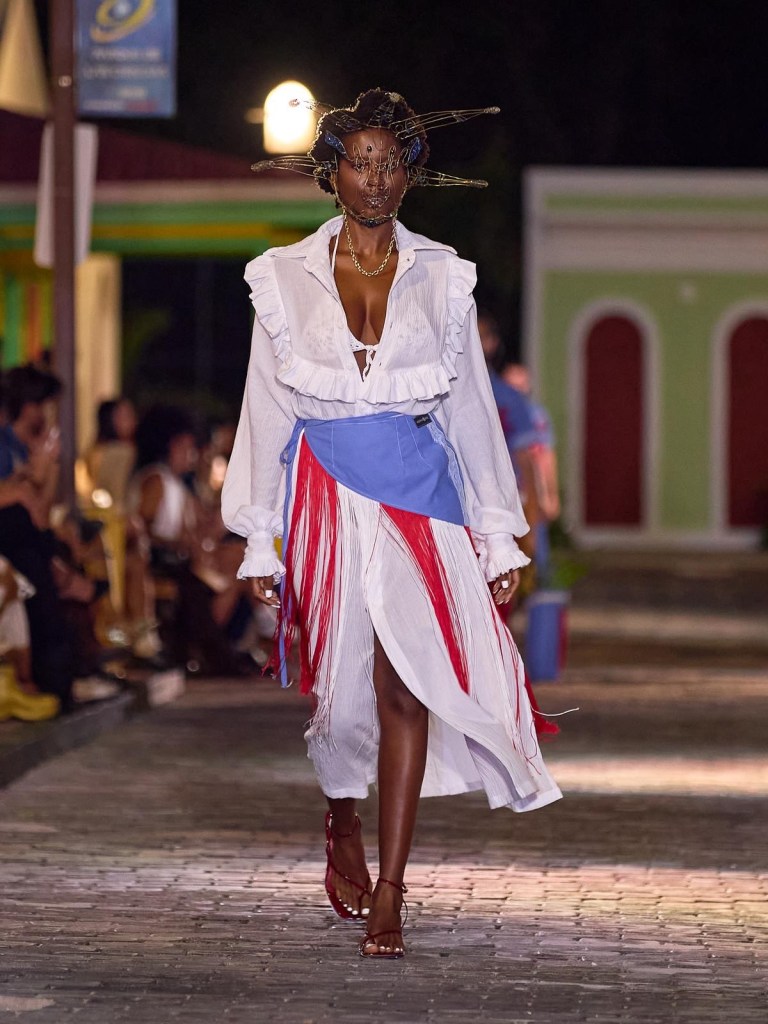
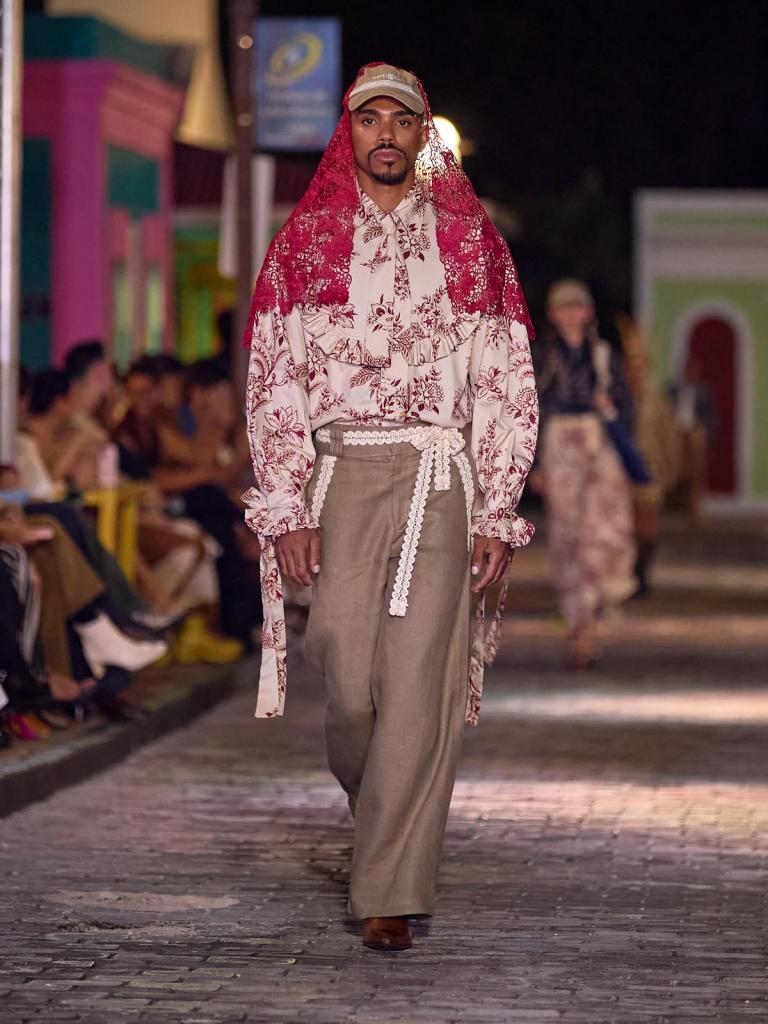
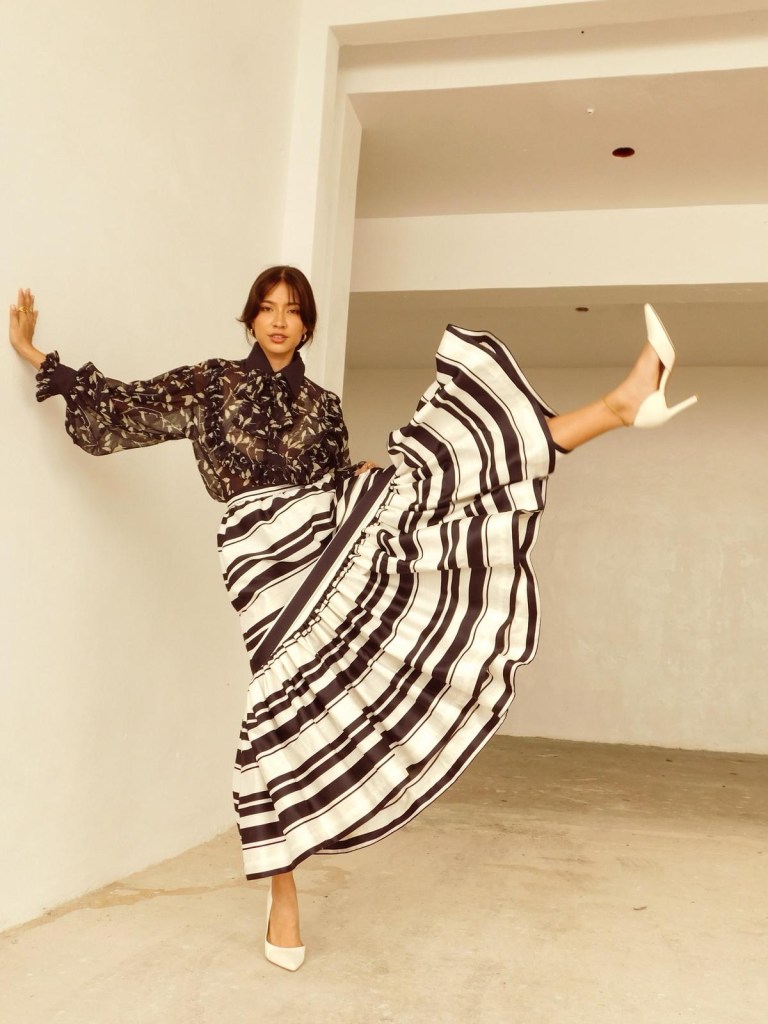
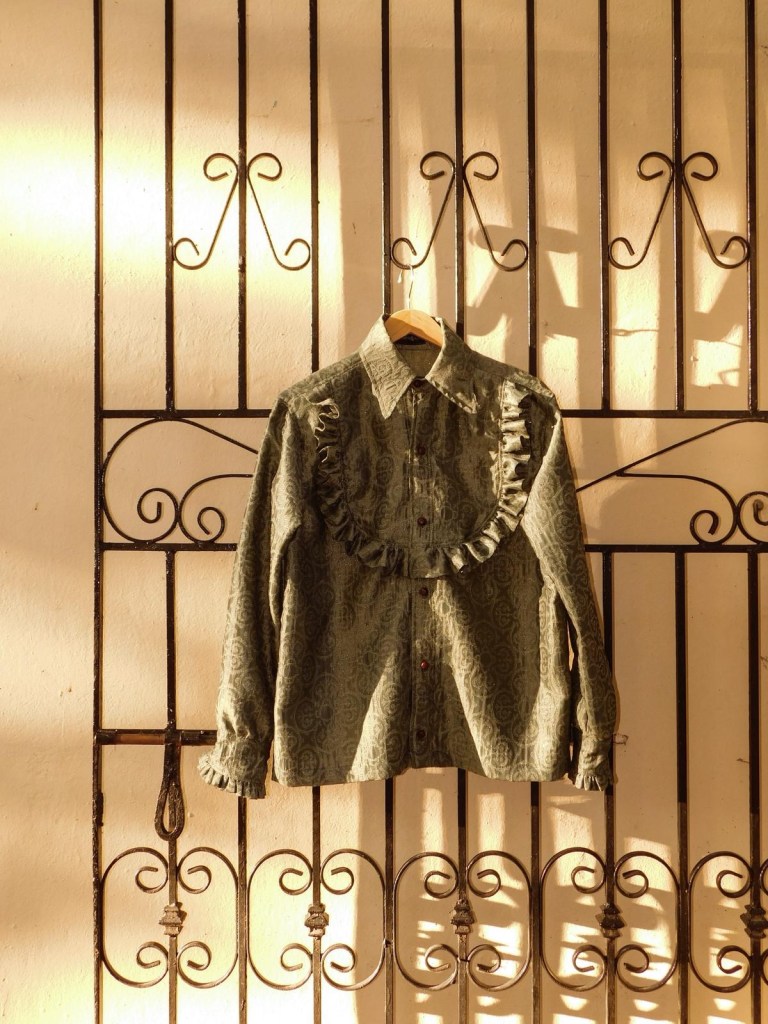
That idea, fashion as a source of cultural knowledge, threads through every piece of art he designs. Take La Valeriano, a piece he has continuously revisited since 2019. In photos, it’s familiar: a button-down shirt with cuffs and a collar. But upon closer inspection, it transcends simplicity and becomes the catalyst for understanding Puerto Rico’s vibrant cultural history. The silhouette opens into a circular cut, supported by a volante (ruffles) across the chest. The design references the Bomba dress, a traditional Afro-Puerto Rican garment worn during the Bomba dance dating back to the 17th century developed by enslaved and free Black populations working in sugar plantations.
“Fue la más difícil… para que el público la viera como una pieza en su clóset. Pero poco a poco… siendo consistente… la gente lo identificaba,” [“It was the hardest part—getting the public to view it as another piece in their closet. But little by little… by being consistent… people came to recognize it”] Nadal expressed. Today, La Valeriano is one of three designs that consistently reappear in Nadal’s works, becoming familiar without the use of a logo. That evolution addresses a tension that Nadal has navigated with style. In an industry that far too often rewards the softening of culture, he refuses to make his work fit into the constraints set by modern standards. When I asked how emerging designers can convey their cultural identity without compromise, his answer was swift:
“A veces… vemos lo latino o lo caribeño como algo menor… pero yo creo que lo que nos hace únicos es cómo nacimos, de dónde somos, qué nos hace únicos, nuestra cultura, cómo nos desenvolvemos, es una personalidad también… creo que debemos estar orgullosos, punto y fin, aunque no sea una estética en específico.” [“Sometimes… we view what is Latin or Caribbean as something lesser… but I believe that what makes us unique is how we were born, where we come from—what truly sets us apart: our culture, the way we carry ourselves; it is a matter of personality, too… I think we should be proud—period—even if it doesn’t fit a specific aesthetic.”].
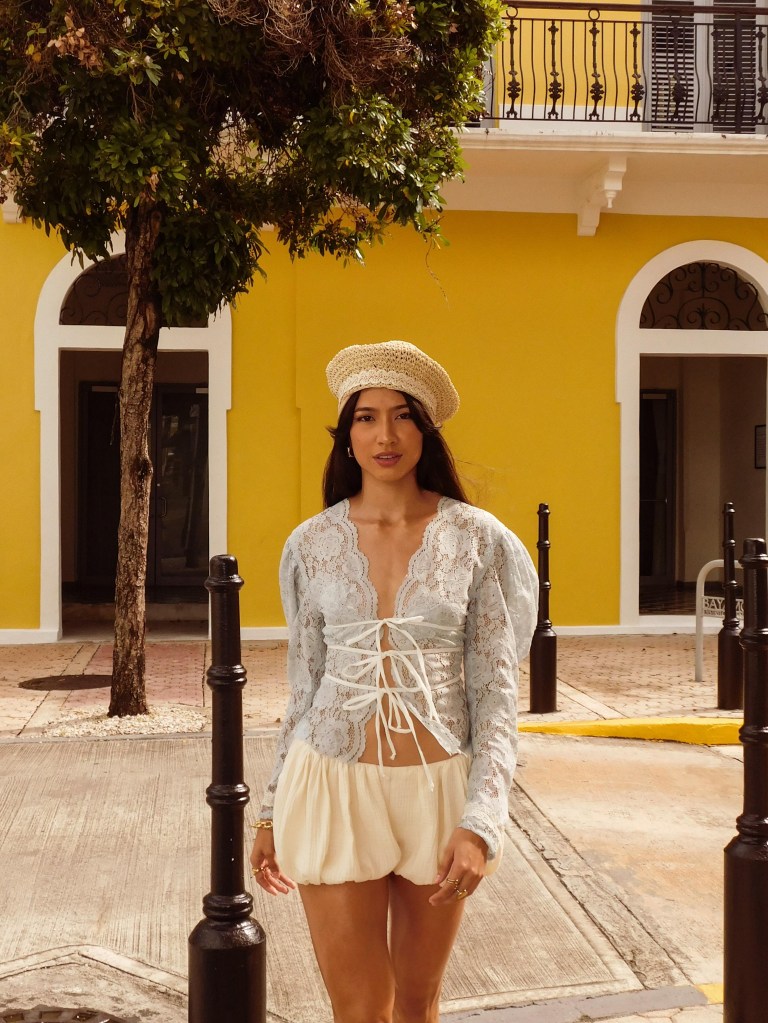
When tasked with designing looks for 30 of Rauw Alejandro’s dancers for the 2025 Latin Grammy Awards, Nadal did not hesitate. In just one week, Nadal designed incredible pieces, pink-hued and featuring signature elements such as lace and ruffles – an ode to Puerto Rican culture. “No hay proyecto imposible en una cantidad de tiempo, es más bien si cuentas con el equipo y con las manos que estén ahí para ayudarte y para sacar ese proyecto a flote. Lo importante es nunca decir que no, dices que sí y después solucionas cómo vas a lograrlo”. “No project is impossible,” he emphasized, adding that it is essential to never say no to any opportunity that comes your way – say yes first and then figure out how to fulfill what you’ve been tasked with. While saying yes can feel intimidating, treating every new challenge as a chance to build your skill set can help you scale your expertise as quickly as Nadal did for the Latin Grammys.
That same momentum was passed on to Bad Bunny’s residency where Nadal designed outfits for the Puerto Rican band Chuwi. During the performance of “Weltita”, Chuwi embraced heritage through pieces symbolic of Puerto Rico’s flag, showcasing its red and white stripes, and blue triangle in a multitude of stylistic design choices – from guayaberas to long skirts and embroidered pants.
When asked about his greatest achievement, his answer wasn’t tied to scale or celebrity: “Cumplir diez años… y no haberme quitado,” [“Reaching ten years… and not having quit”] he answered. Before we wrapped, I asked Nadal what advice he would give to Columbia students and young adults interested in fashion.
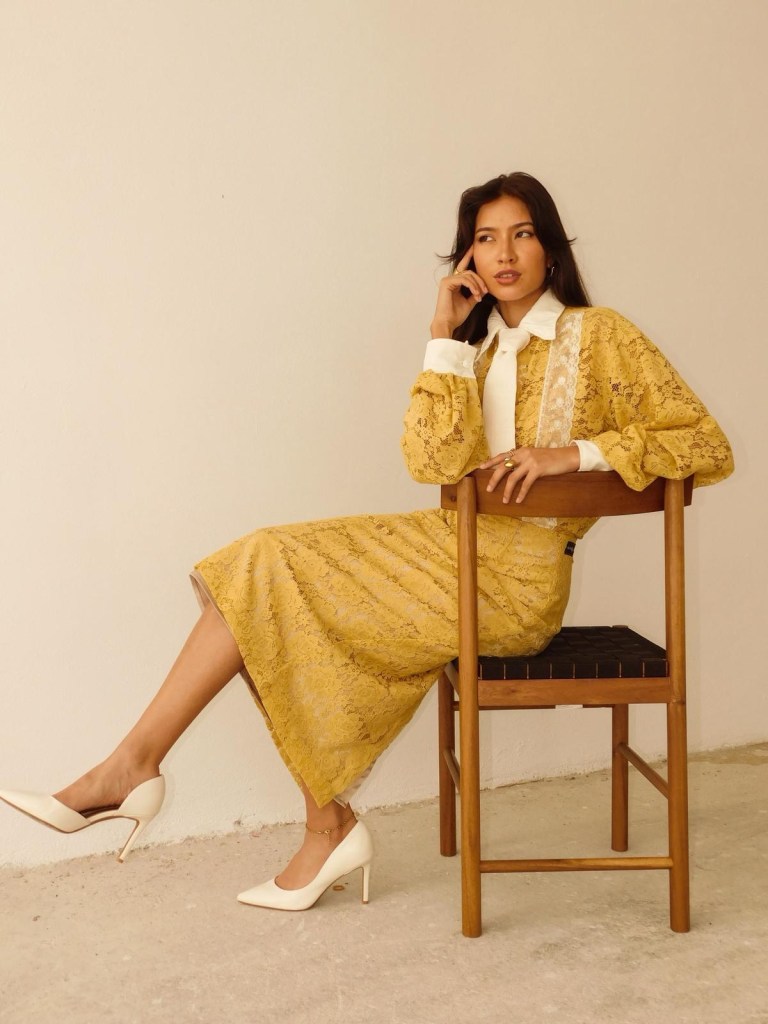
Photo courtesy of Herman Nadal
What advice do you have for students interested in fashion?
- Consistency is key. Treat every project with the same importance. It does not matter how small or grand the project is; you never know who is looking at your work, Nadal asserted.
- Surround yourself with people who truly support you. “Yo creo que eso tiene mucho que ver que tengas un apoyo familiar o de amigos o de personas que vean el potencial” [“I believe it has a lot to do with having support from family, friends, or people who see your potential”].
- Balance. “La creatividad es algo que se nutre” [“Creativity is something that is nurtured.”]. Nadal encourages students to watch movies, listen to music, visit museums, and to observe landscapes to add to one’s artistic repertoire.
In numerous ways, Nadal’s work mirrors the very shift this moment in fashion calls for, a gradual transition based on intention and representation. Fueled by consistency, rooted in culture, and sustained by community, Nadal’s designs tell a story. Ultimately, his journey shows that the most powerful form of innovation in the fashion industry doesn’t follow one specific “aesthetic”. By grounding all of his works in purpose and history, Nadal has created a blueprint for woven heritage, demonstrating the essence of staying true to one’s roots.
 cufashionsociety.com
Leave a comment