By: Ashley Hudson
Carolyn Bessette Kennedy never tried. That, of course, was the point, and precisely why fashion cannot seem to let her go.
Her particular brand of effortlessness is circling the cultural atmosphere again, carried on the wings of a 90s revival that has moved well past trend status and into something closer to collective longing. The decade is back and bringing everything, from music and television to the pleading demand for that classic 90s minimalism, with it.
Ryan Murphy’s dazzling new FX series Love Story has reintroduced the tragic romance of John F. Kennedy Jr. and Carolyn Bessette Kennedy to an entirely new generation. We are a generation that will promptly romanticize it on social media before the credits even finish rolling. Meanwhile, Calvin Klein delivered a fabulous Spring/Summer 2026 collection at New York Fashion Week as if to confirm that nostalgia for the 90s is hotter than ever.
So what does it mean, exactly, when nostalgia reaches a fever pitch in the middle of the most digitized era in human history? There is something almost paradoxical about a TikTok-fluent, algorithmically-optimized culture reaching back toward the clean lines and timeless silhouettes of Calvin Klein and Marc Jacobs. And yet, here we are.
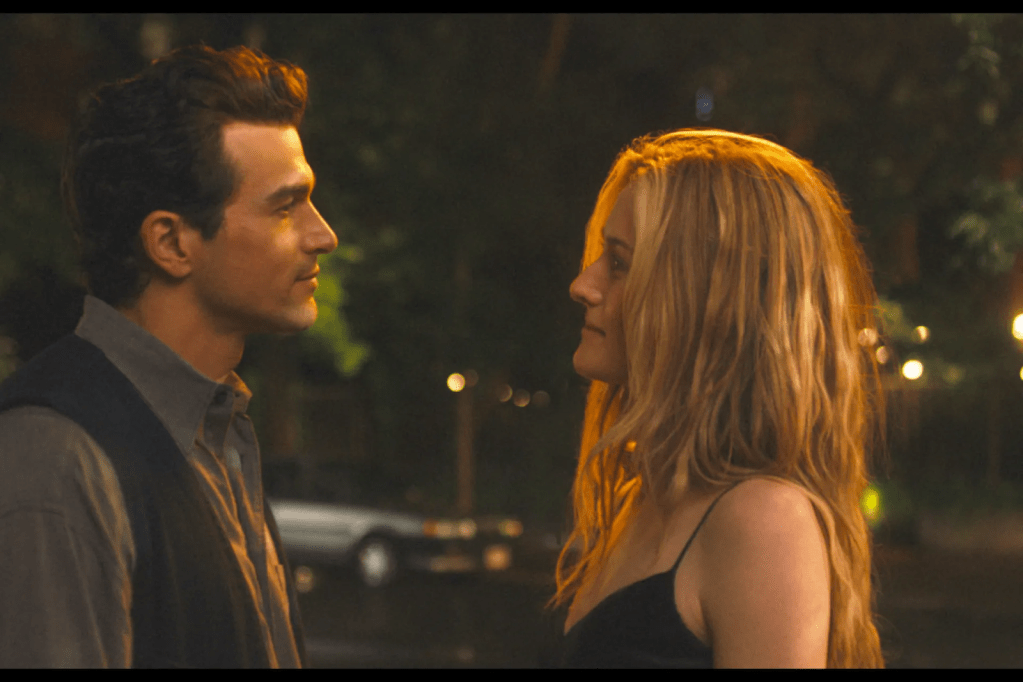
Ryan Murphy’s, “Love Story” on FX, Photo via variety.com
What even is 90s minimalism? What marked the shift into the era? With the rising popularity of the supermodel era, and a recentering of focus on the qualities of vintage fashion, 90s minimalism came to represent largely one thing: simplicity. Fine tailoring, minimal makeup, and structured outlines, these tenets of minimalist fashion became what we stylize today as “effortlessly cool” when analyzing the decade’s style. We live in an era of relentless noise. 90s minimalism offers something increasingly rare: negative space. Room to breathe. Carolyn Bessette-Kennedy was the blueprint. The cashmere, white shirts, the way she wore her coats and headbands. She was the epitome of confidence that we now found so covetable.
Born in direct conversation with post-Reagan optimism, the 1990–91 recession, and a culture simply exhausted by its own excess, 90s minimalism was almost inevitable. Consumers and designers alike made the collective decision to distance themselves from the garish maximalism of the 1980s, and replace it with something cleaner. In its original context, 1990s minimalism functioned as a rejection of sorts, and instead brought a resignation of working with the resources available to craft something chic and fashionable, amid the economic downturn of the beginning of the decade. It was a deliberate choice to work elegantly within the constraints of the time, and find chic in simplicity when opulence was no longer sustainable.
The conditions that produced it, however, are not so easily replicated. Today’s fashion landscape is governed by an algorithm that accelerates and discards trends with a speed that would have baffled even the most prescient 90s editor. To truly inhabit this style requires a pace of dressing, and living, that the digital age has made so foreign.
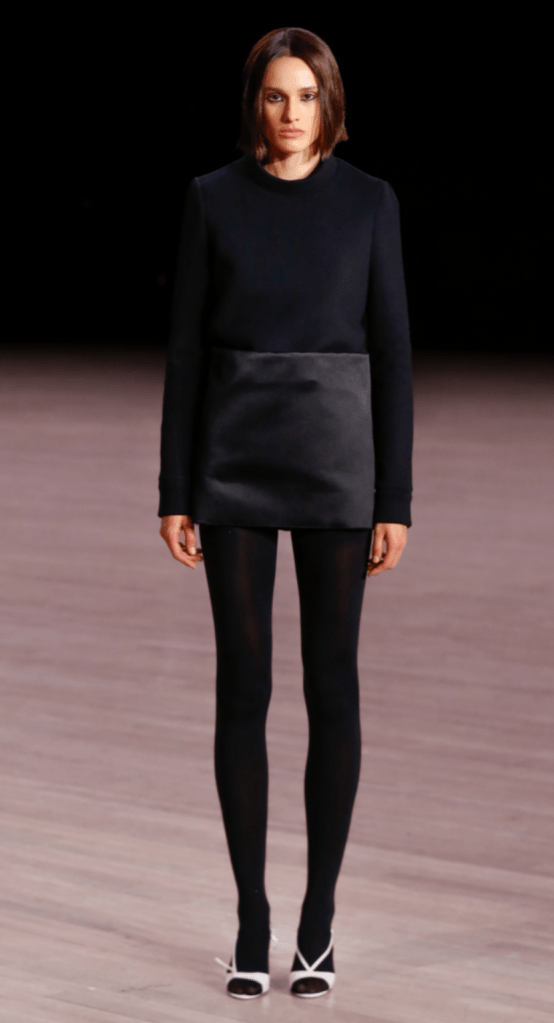
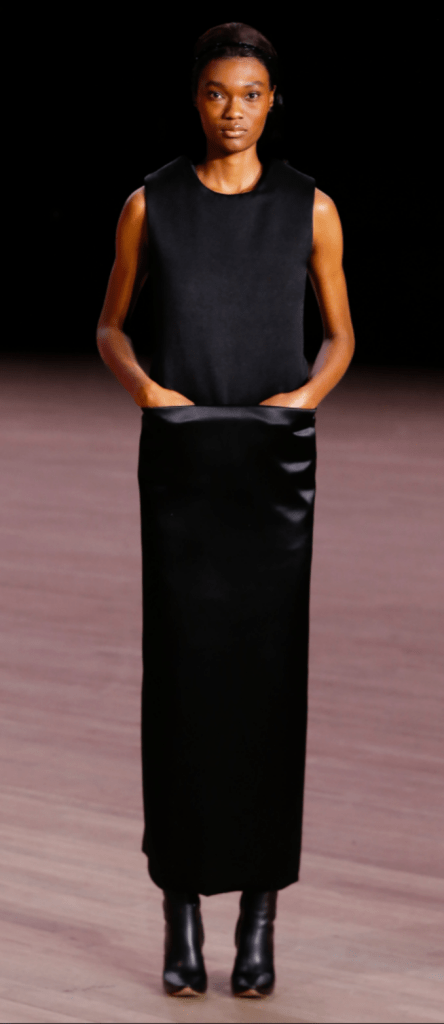
Marc Jacobs SS26, Photo via wwd.com Marc Jacobs SS26, Photo via wwd.com
And yet, the appetite persists. The current resurgence of minimalist fashion and the rise of clean lines, plain denim, neutral palettes, lack of skin, and sharp tailoring often speak to a backslide in social and political liberalism. That is not to say that these aspects of fashion are inherently conservative, but minimalism speaks in tandem with a political and social climate tilting towards conservatism.
If history has taught us anything, it is that fashion abhors a monologue. Every action has an equal and opposite reaction. Some maximalist count-swing is already gathering momentum in some downtown atelier. I’d hypothesize that a synthesis is what the future holds, with clean lines and fine tailoring, maximalist, bright, and bold colors and statement accessories. Can these two really coexist?
The harder question is whether any of this can be done with genuine ease in an era that documents everything. Everyone’s worried about everyone and everything. The internet did not kill 90s minimalism, but it did complicate its central premise. Effortless, by its definition, cannot be methodological. Yet here we are, literally watching it get methodically recreated. Everything is watching and everyone is performing.
What saves it is that the same digital culture has also democratized discovery. Vintage designs are circling globally and the classic CBK silhouettes are now belonging to us all. Love Story is proof that there is always something still alive in the archive.
The most exciting prospect is the possibility of taking the era of CBK and placing it in the hands of a new generation. Where exactly that leads, I cannot say with certainty. But fashion has always been most interesting at the edge of its own contradiction.
 cufashionsociety.com
Leave a comment