By: Annabelle Leung
Fashionistas might really be fashionably late, but does their industry’s reputation — fostering toxic work environments — precede them too?
When Anna Wintour and Meryl Streep shared a glance, then a hug, after Dolce & Gabbana’s show at Milan Fashion Week, people were reminded of the Vogue Director’s reign – the legacy she’s about to leave behind. Wintour’s influence in contemporary fashion will always be iconic. But, only a handful know about the intricacies of working for her within the world-renowned editorial house.
I’ve gotten to know some amazing friends from the hustle culture in Hong Kong. Two of them, Talia and Natasha, interned with Vogue Hong Kong this past summer. Over drinks in the West Village last week (highly recommend Alice for a girls’ night out), the girls recounted their experiences at the print house.
About the Interns
Talia – Born and raised in Hong Kong and the US, Talia is a current junior at the University of Southern California, majoring in PR & Advertising.
Natasha – Born and raised in Hong Kong and the UK, Natasha is a current junior at the University of Pennsylvania, majoring in International Relations and minoring in French and Fine Arts. Both spent their summers in Vogue HK under the English Editorial team.
Walk through a day in your life working at Vogue.
Talia
Technically you’re “supposed” to be in office by 1030 – but “it’s (the) fashion (industry), you know how it is.” I was very envious to learn of a rest area for interns, allowing for “plenty of space to chat a bit with other interns” before starting work. Talia mainly wrote articles, supported by a collaborative spreadsheet full of article ideas and assignments. Her days would also sometimes include syndications, or print translations in the industry. This would be a task like taking articles from non-English Vogues e.g. Vogue China to translate for the Hong Kong audience. This exhibits a new angle of collaboration and flow throughout the different headquarters of the magazine.
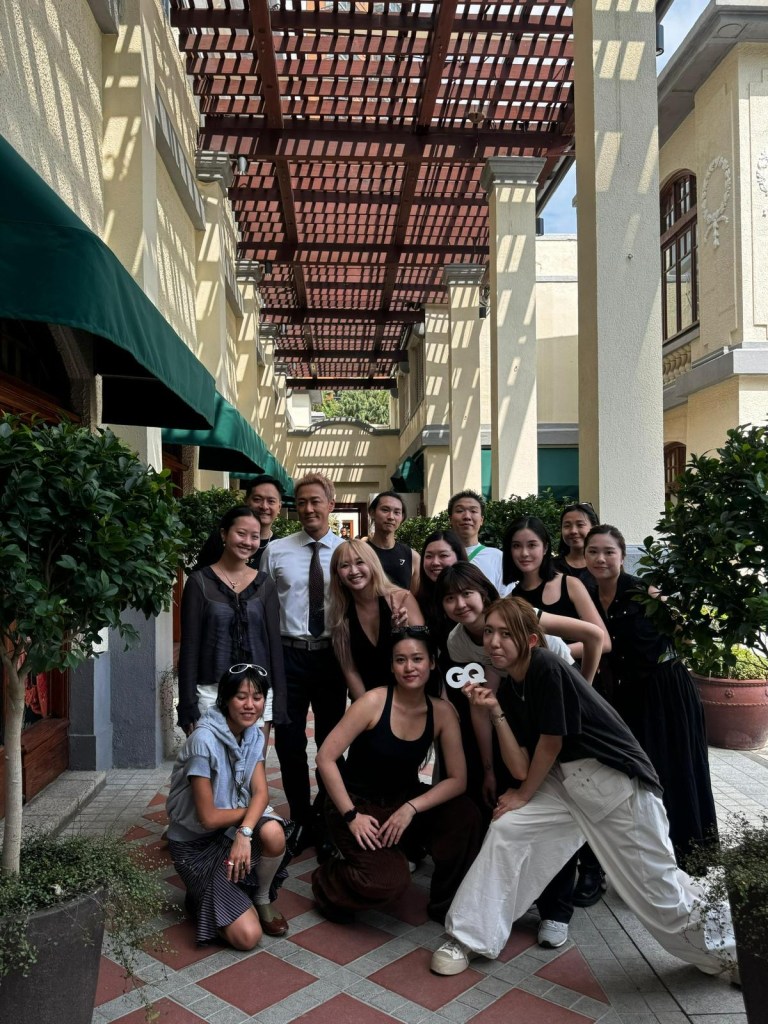
If you ever visit Asia’s World City, Talia recommends the Wan Chai area for lunch spots, where the Vogue headquarters are also stationed. With 1-2 hours of a lunch break, you know it is guaranteed that she’s tried all the good spots. Post-lunch break, Talia would send prompt ideas to her supervisor, simultaneously also supporting GQ – the department that specialises in men’s fashion. As a relatively new department in the APAC region, the workload was quite dense for interns, sometimes requiring them to propose one article a day during peak season.
Natasha
The multidimensional nature of working in the printhouse is “what makes the job most rewarding.”
“I had free reign to brainstorm and write whatever I wanted,” Natasha noted, as long as her supervisor approved. There were also opportunities to help out with photoshoots. Being a runner, as they call it, was much like the typical intern duties in movies: getting coffee, steaming clothes, or, in Natasha’s words, “being as helpful as you can without getting in the way.”
They would also help out on “Field days,” or on the ground research for content. Since Natasha’s duties included writing a plethora of food articles, work also included eating!
What was the most memorable event for you?
Talia
For Talia, the most exciting highlight was a photoshoot done with singer and good friend Constance, who had just debuted as a pop artist. She recalls an energetic environment with lots of lively young people. “The best clothes were there, all Chanel, and we got to sort through and organise that.” Talia was tasked to prepare around 5-6 looks. She also supported the flow of interview questions. The warmth and coziness of the experience overshadowed the fact it ended at 2 in the morning.
Natasha
Natasha interviewed Taiwanese-American artist Lee Mingwei. Through his exhibition in M+ Museum featuring ‘Guernica in Sand’, she learned how Lee’s recreation of the world-renowned work by Picasso was inspired by Tibetan, the Buddhist idea of impermanence. Mingwei engaged with Natasha on a personal level, explaining the reasons for how the work is entirely made out of sand and intentionally enables invited members of the public to walk barefoot over his work. This doesn’t “destroy” his art, but more so transforms it into something completely new, a reflection of social influence.
What is something you didn’t expect/ others our age wouldn’t expect that you did on the job?
Both girls were surprised by the extent of freedom they were given with what to write, beyond commercial, mainstream ideas. This deviation was not only allowed but encouraged.
With that being said, the caveat of working in a multinational firm meant staying true to the business model. Natasha noted how “all the Vogue subsets; they were all franchises,” meaning that there was a certain limitation as to how technical or non-fashion focused pieces could be. More socially analytical pieces did have to be spun in a certain way that focused on purely fashion, beauty, and lifestyle.
“The purpose and intent of Vogue HK is (stimulating) readership.” Natasha highlighted how regional competition with other Vogues like Singapore and Korea demonstrates the level of internal competition that is just as, if not more, intense than other magazines. This form of regulation and streamlined behaviours demonstrate how print houses maintain relations and neutrality by streamlining the apolitical nature of fashion.
“They didn’t treat us like kids,” said Talia. Given that the full time editors were also in their 20s, Vogue offered a very modernised work environment fomented under thought and contemporary discussions. Talia recalls that more like-minded colleagues enabled interns to talk freely and engage as valued parts of the team. “Everyone on our team valued our opinion and input,” said Natasha.
A supportive atmosphere around real-life Miranda Priestleys. Never thought that was possible, did you?
 cufashionsociety.com
Leave a comment