By: Sarah Dalloul

Fashion is so often dismissed as superficial. Yet it is a form of storytelling, holding memory, culture, and community. It speaks in rich texture and silhouette where words fall short, stitching emotion and history into fabric and form. One designer who embodies this spirit is Lebanese creative director Sarah Beydoun, founder of Sarah’s Bag. What is fascinating about her work is how each piece manages to not only be an accessory, but a bag that carries heritage, artistry, and empowerment.
Founded in Beirut in 2 000, Sarah’s Bag quickly gained global attention for the brand’s bold and intricately crafted handbags that blend Middle Eastern craft with contemporary design. Yet what sets the brand apart is not only its aesthetic, but its mission. Beydoun employs women from underprivileged backgrounds–including prisoners and ex-prisoners–training them in traditional embroidery, beadworks, and crochet. The result is a prototype of how luxury design has the power to sustain communities and preserve artisanal traditions. In an era of fast fashion and mass production, preserving these artisanal traditions is an act of cultural continuity. It’s a way to protect not just technique, but the stories, patience, and pride embedded in handmade work.
Walking through Beirut, one often sees fragments of history layered into the city’s landscape, the Roman ruins standing beside French colonial architecture, or a new cafe tucked into an Ottoman-era house. Sarah’s Bag captures these fragments of the past and present. A clutch might mix pop art and Arabic calligraphy; a purse might turn an old tapestry pattern into something bold and neon. Every design feels like Lebanon itself: impossible to define, but impossible to forget.
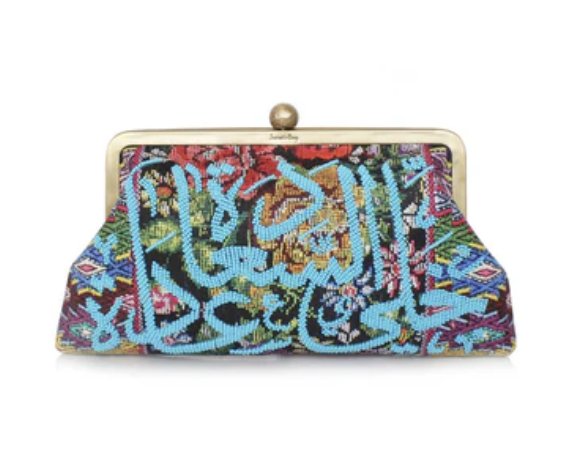
This blend of memory and modernity feels deeply personal. Growing up in Lebanon, I was surrounded by the familiar texture and colors that now appear in Beydoun’s designs: the gold threads of an embroidered tablecloth, the hand painted tiles in my grandmother’s home, the hum of artisans selling their crafts in Beirut’s souks. Sarah’s Bag captures that same sensory world, but reimagines it for a global stage. It reminds us that fashion is a way of carrying pieces of home and personal identity, wherever you go.
Today’s fashion industry moves at a global pace, spreading the same trends from one city to the next and leaving little room for regional identity. This leads to many major brands tend to push out seasonal trends that homogenize fashion instead of highlighting its cultural distinctions. But Sarah’s Bag insists on cultural specificity. Each embroidered bag carries an identity, a history, a collective memory, far more than just an accessory.
Beydoun’s work is also engraved in political meaning. In hiring marginalized women, Sarah’s Bag challenges the assumption that luxury is detached from social responsibility. Each piece embodies hours of handwork that transforms women’s lives: income, skill-building, and dignity stitched into every bead. In a country that is often defined by instability and inequality, the brand becomes an act of resistance and a reminder that fashion can be inclusive, ethical, and community oriented.
Sarah’s Bag has reached global audiences, from Paris Fashion Week runways to concept stores in Tokyo. However, it has never abandoned its Lebanese roots. In fact, its global presence underscores a vital question for the fashion world: can cultural heritage be both preserved and reimagined for international markets? Beydoun answers with designs that live and evolve without erasing their origins.
Fashion, then, is about the lives interwoven in their making, the histories they carry, and the futures they imagine–fashion doesn’t just reflect the past, it also projects possibilities. It reminds us that creativity is never static, each design becomes part of an ongoing dialogue between tradition and reinvention, between what we inherit and what we dream of being.
Sources:
Maile, Julia. “Bazaar Meets The Founders Of Sarah’s Bag.” Harper’s Bazaar Arabia, 19 June 2018, https://www.harpersbazaararabia.com/fashion/fashion-expertise/interview-sarahs-bag
“Made in Lebanon: Sarah’s Bag.” World Intellectual Property Organization (WIPO), 2021, https://www.wipo.int/pressroom/en/stories/sarah_s_bag_2021.html.
 cufashionsociety.com
Leave a comment