By: Ashley Hudson and Angelina O’Connor

Professor Monica L. Miller’s 2009 book, Slaves to Fashion: Black Dandyism and the Styling of Black Diasporic Identity is a cultural powerhouse. It is the inspiration and driving influence behind The Costume Institute’s Spring 2025 Fashion Exhibition at the Metropolitan Museum of Art, with the Met Gala– fashion’s biggest night of the year– marking its official opening. In Slaves to Fashion, Miller maps the evolution of the Black dandy from its inception in the 18th century to the contemporary cultural landscape. As cultural figures, the men– and later, women, who encapsulate the soul of Black dandyism are those who use fashion, personal styling, and grooming aesthetics as “a tool and a strategy” in asserting dignified and powerful identities in the face of marginalization and racial stereotypes.
Black dandyism was first characterized by enslaved Black people being dressed in fine clothing, often as a demonstration of their owner’s social status, class, and a gross display of wealth. However, both Black freedmen and formerly enslaved people started to redesign and reimagine both what it meant to wear fancy dress and fine clothing, and what it meant to be Black wearing such. Black dandyism, often described as a cultural style movement and phenomenon, has taken over the social media zeitgeist in recent months as Black diasporic fashion reaches the greater public. However, Black dandyism is larger than just looks and fancy dress, but a movement rooted in defiance, resistance, and pride against the dominant culture’s perception on what it means to be Black.
CUFS had the opportunity to speak with Professor Miller about Black dandyism, its inspiration for her work, the evolution of dandyism, and how it informed the upcoming exhibit at the Met.
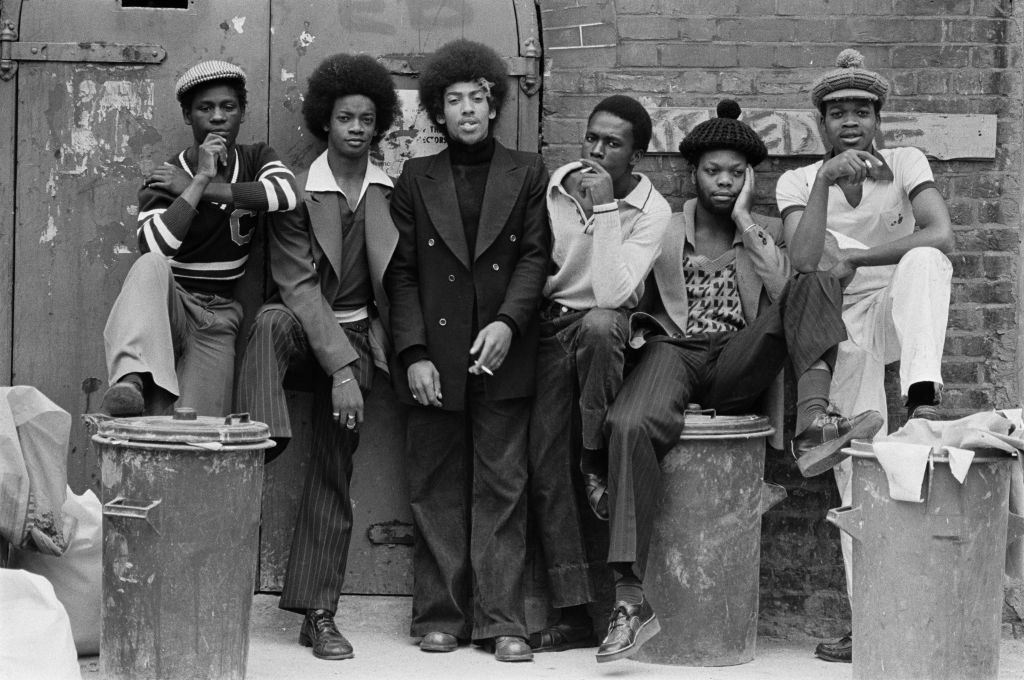
Ashley: What does Black dandyism mean to you?
Profesor Miller: That’s a very large question at this point, “what does it mean to me?”. I’m going to say that one of the ways I like to think about it— and it can be thought about in many different ways–is as a tool and as a strategy. When I think about Black dandyism, I’m thinking about the way that Black people use clothing, dress, in a kind of witty and sometimes very strategic way to say something about either their identities or their kind of, sociopolitical positionalities. In that way, when I think about clothing and dress and a larger history of Black representation, I’m really interested in ways that people use what they have to create what they don’t have, or to comment on their conditions of being.
Ashley: That segues into my next question—do you think class and the ability to be a Black dandy are inextricably linked? Or do you think that anyone could be a Black dandy historically, and would you say it applies to today? Or does it take a new shape?
Professor Miller: Anyone can be a Black dandy…anybody can practice Black dandyism. Dandyism is often sometimes associated with high style, fancy dress, whatever couture, but in the way that I am thinking about it and the way I am trying to investigate it at the exhibition at the Costume Institute, I’m thinking about a much more expansive definition of dandyism.
I’m really interested in intentionality, I think dandyism is so much more about discipline, I mean a discipline that’s related to appearance, to dress, to comportment. That discipline isn’t always something that’s read conservatively, it can also be seen and applied in a much more fabulous way. For example, if we’re thinking about dandyism, sometimes those like A$AP Rocky, who, at different moments in his trial showed up head-to-toe in Valentino appear and at the same time, there was an intentionality in which he was using clothing to send various kinds of messages. At the same time, we can think of Colman Domingo showing up at any event, honestly, like at the Critics’ Circle Awards, wearing an insane overcoat with a purple lining, there was a real intentionality to that outfit, to that moment, and in some ways what he was saying about how he values himself and his work.
But those are really different, they look really different, and in terms of thinking about class, dandyism has always been and can be seen in this very wide arena of class, and sometimes a dandy act is something that is a full outfit, and sometimes a dandy act is something really small. Sometimes it’s an accessory, a ring on a finger, something much more available and useful in that way. I don’t think dandyism is only available to people who “can afford it”, because I think all kinds of people practice it in different ways.

Angelina: What inspired you initially to write your book? And did your perspective change or fluctuate during your research at all?
Professor Miller: I mean, I tell this story a lot but it’s true. I was in graduate school, writing a dissertation – trying to write a dissertation – and initially had a different topic. I was writing about African American Novels in Politics, and – it was really boring (laughs), like it was no good. So I was taking a class at that time on W.E.B. Du Bois, and we were reading “The Souls of Black Folk”, and I was looking for a paper topic honestly, and was reading a bunch of stuff about Du Bois and found out that he had been caricatured as a dandy. And [he] hated it, he was furious. And I was like, Why?, because what I knew about dandyism at the time is that, you know, dandies are considered to be really well dressed people. And I was like, why would Du Bois be upset about that? Because he was actually really really well dressed.
But then I did the research and I realized in his time period, so early 20th century, the word “Black dandy” was really tied to blackface minstrelsy and a character in the blackface minstrel show. So he was really upset about being caricatured as this sort of “uneducated buffoon” who wore crazy clothes, right?
But, from my mind, he was practicing a form of dandyism. Like, that it was related to how Black intellectuals and Black people in the public eye had to present themselves, on the one hand to be taken seriously by white people when they were arguing for rights, and on the other hand because they were proud of themselves. They were showing dignity, pride, and self possession. …so he’s really upset about this form of dandyism at the same time he’s performing another part of it, right?… so I can use this idea to talk both about stereotypes and self representation. And that was kind of where it came together for me.
Ashley: How do you think Black dandyism, usually historically speaking Black men, has affected the way Black men and women view themselves?
Professor Miller: Particularly in my book, I really think about dandyism as a certain kind of performance of identity, sometimes that performance happens between a person and the mirror, in a very intimate space. Sometimes that performance happens intra-racially–think of the Harlem Renaissance, where Black people were styling out for each other–and then sometimes that happens with somebody like FD who’s on the world stage, presenting a view of himself, knows that he need to present a certain kind of view of himself to the largest possible specifically white audience. So, in terms of how dandyism works for Black men and women, I think it works on all of those levels, I want that sort of wide perception to be understood. Sometimes, dandyism is for the public and sometimes it is actually for the self.
Ashley: How does Black dandyism compare to, and possibly take a new shape in majority Black countries that were colonized by Europeans compared to Black members of the diaspora living in the West? Someone who lives in Nigeria, compared to someone who lives in the United States, or even the Dominican Republic–do you think there is a notable difference?
Professor Miller: That’s a great question! There’s some obvious examples I can think of–the Congolese Sapeurs, very flamboyant, and there’s another similar group, the Swenkas in South Africa. For those, kind of, other dandy “subcultures”–I don’t know if they’d consider themselves dandy subcultures–I think because you’re asking two parts of the same question. You’re asking what about manifestations of dandyism, if you think about it as a meeting of Western and African aesthetic modes, what about that in colonial contexts? And what about that kind of after that time.
I would say in the postcolonial context, we get sort of the critique there: what’s “appropriate” for Black people at a moment in time. The Sapeurs are really pushing that question, of what’s “appropriate” for people to spend their money on, how appropriate is it for Africans to take on and modify Western dress. They’re really pushing the idea of the placement of Africans in a space that has been invaded in some ways by the Western imagination, bringing it home, and pushing this question to not only former colonizers but also to other Africans.
How it looks in other places, I think it looks really cosmopolitan, and I mean cosmopolitan within Africa. It’s really an interesting combination of African silhouettes, African fabrics, African patterns that are more, kind of, indigenous, but it’s a real mashup with other globalized fashion phenomena. Some of that is Western, some of that can be Asian, I really think it looks cosmopolitan to me. Again it also raises the question, do we see Africans as cosmopolitan? What mobility does the African imagination have? So much of this is about mobility of imagination and then manifesting it materially or sartorially.

Angelina: What do you appreciate about the dandyism of today’s music artists, some of whom will be in attendance [at the Gala], and their representations of themselves through forms of Black luxury style versus appealing to white high style as they may have been made to in the past?
Professor Miller: I think that is a different story right. Essentially since the early 60’s, 70’s, 80’s, there has been way less attention for Black artists and entertainers to do that thing – to appeal to other audiences. In some ways, I think it’s their lack of assimilation, or assimilatory gesture initially that can make them incredibly popular. The fact that they’re not satisfying certain kinds of demands.
They [early Hip Hop artists] were just people interested in talking about their realities and then showing some of their realities, their aesthetic drive with their clothing with their accessories– that’s in some ways how I see that.
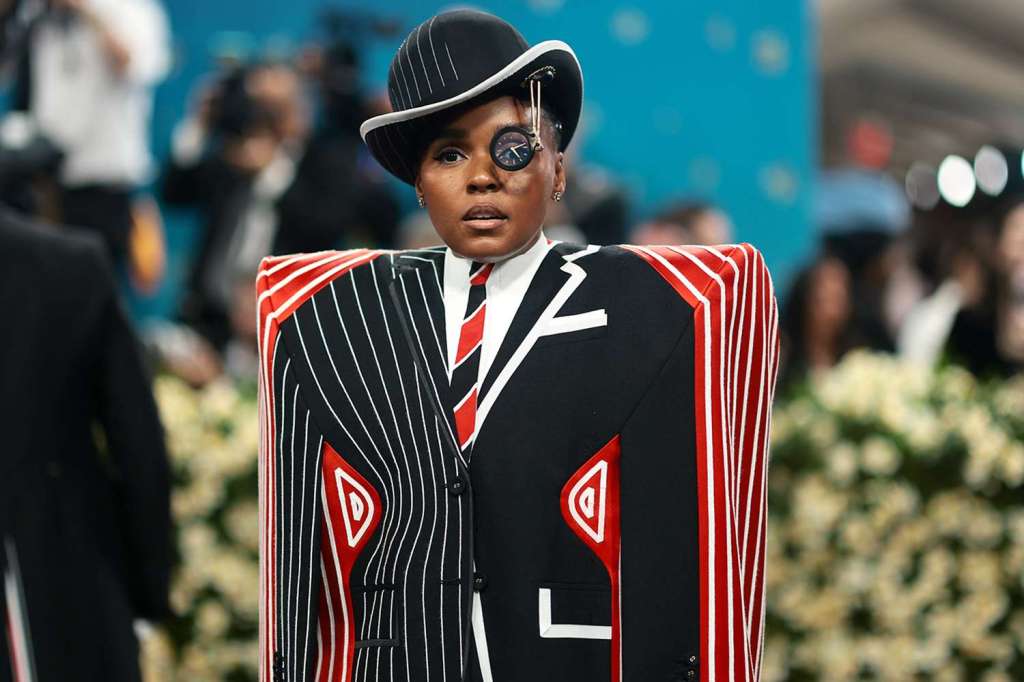
We can also think about somebody like Janelle Monae. In the very early part of her career, [she] was really focused on the tuxedo, because for her the tuxedo allowed her to not get caught up in having her body examined or exploited in particular kinds of ways. She was wearing this uniform so that she would be heard, right, rather than primarily seen or objectified. And, she also wore the tuxedo because her father had worked for the city she grew up in, and he always wore a uniform when he was at work. So she was like, when I’m in this tuxedo I’m working. She was honoring her family and also trying to protect herself from all kinds of different gazes.
I think that the exhibition that I’m putting together is actually able to convey those two things, right, and you know, think about it in relation to gender, to race, to class. [Janelle Monae’s] style evolution is really fascinating to think about in this way on a dandy spectrum. She was doing one thing and now is doing something very different, but they’re all related to the ways in which this Black woman, Black person, is using fashion as the tool, as a strategy thinking about fashion and power. I think there will be a lot of that.
Angelina: I’m curious how you see the digital age influencing the role of fashion and Black self representation.
Professor Miller: Oh my god…When I was starting with this book–I mean, I wrote the first words of my book literally some time in 1990-something…before I had a smartphone, before Instagram, before any of that.
So I just feel like one of the things social media is good for (laughs)–I have a lot of criticisms–is creating conversations about visuality and visibility. Sometimes that can be really negative and sometimes it can be really positive.
I think the conversations around Black style, around Black folks in fashion, there’s much more of that because of social media and visuality, but also a kind of diversity in that conversation which sometimes can get off the hook, but it’s also just kind of fascinating to see. So that’s one thing that has changed since I’ve started and most of it is good in terms of the ways that people see each other.
Ashley: I want to shift more to the exhibit—what do you hope people take away from the exhibit at the Met?
Professor Miller: The exhibit covers a really long history, 18th century to the present. It also really thinks deeply about different moments, historical and social moments, like my book does, in which Black people are thinking about fashion and power. I hope people see in the exhibition, or come away from it seeing something they’re familiar with.
There’s one section of the exhibition called Juke, that is about the relationship between clothing and entertainment, it’s about the zoot suit, the tuxedo–my great uncle Tommy was famous for wearing blue suits, I want people to come in and see members of their family, or different kinds of strategies that people used to express their identity or to say something about themselves in the world. I want there to be, sort of, that recognition, because in the exhibition I present dandyism in this expansive way so there are different entry points for people to have. Sometimes it’ll be like, “my father did that, my uncle did this, I’m looking at Janelle Monae,” it can be that kind of entry point or it can be an entry point of understanding, for example of the Civil Rights Movement or during Reconstruction in America why it was important for Frederick Douglass to look a certain way. Why that was important in that time, but also, the importance he assigned to it, not just how the public receives it, but how he wanted to present.
I’m really hoping that people see something familiar, that they understand something they already knew differently, it’s a presentation of 300 years of Black history, so I’m really excited about that too, at this moment.
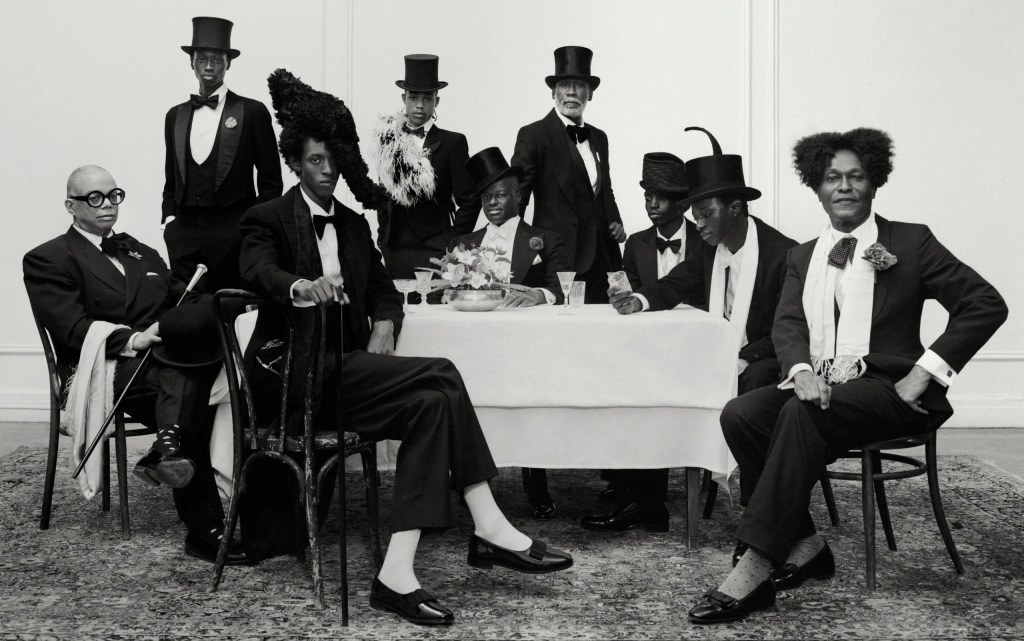
Professor Miller gives an outstanding and completely comprehensive understanding of Black dandyism, what it means to be one, what it means in general, and how it looks in both the modern and historical context in this interview. Her perspective opens the space and creates room for further exploration of how Black dandyism and the rhetoric it creates intersects in the daily life of the Black diaspora, and how it will continue to evolve.
____
Be sure to read Miller’s book, Slaves to Fashion: Black Dandyism and the Styling of Black Diasporic Identity, and view The Costume Institute’s spring exhibition, Superfine: Tailoring Black Style, on view at The Met Fifth Avenue from May 10 through October 26, 2025.
 cufashionsociety.com
Leave a comment