By Raja Ahmed Saeed
“The Middle East” has often been imagined in the West as a vast region riddled with war, humanitarian crises, and a dearth of basic human rights. The global imagination tends to paint Middle Eastern women as lacking agency, hidden behind forceful veils and shunned from exercising their freedom. I could write a whole other article on the deep racism and endless propaganda that has birthed this widely accepted consensus, however, in this piece, I will be solely focusing on a particular industry. On the surface, this industry may seem to be the furthest thing from our oppressed understanding of Arab nations, yet, it has both historically inspired the West and in the 21st century exists as a multi-billion dollar phenomena run by the same veiled women the West loves to pity: Fashion.
Starting with the plain facts, the Middle Eastern fashion market, according to Euromonitor economic data, is valued at about 89 Billion dollars. The region’s fashion market is projected to record a CAGR (Compound Annual Growth Rate) of approximately 7% between 2023 and 2027. These hard numbers show clearly that the Middle East is an economic goldmine for fashion. This perspective is echoed by major players in the fashion and luxury market, including Carole Madjo, Barclays’ Head of European Luxury Goods Research, who stated, “we have great visibility on the long-term perspective of the Middle Eastern market and are also quite optimistic about it. The luxury market is now around 5-6% of sales, and I think it can easily double in the next 10 years or so.” The evolving nature of this market has been shepherded by nations in the Middle East such as Saudi Arabia, Qatar and the UAE being open to the luxury market and altering their government policies as such. The general mood among both customers and the governments of these countries is changing with more stores opening and a greater demand for luxury products and the fashion industry as a whole.
Stepping away from the numbers, culturally and historically the Middle East hasn’t been as divorced from fashion as is commonly thought. The rich and vibrant history of the Arab world has been influencing trends in the fashion world in specific the predominantly West-centric fashion world for decades. Although we see Haute couture as being primarily French design, designers of European heritage have conveniently used the Arab world as their muse repeatedly without giving it the proper credit. Orientalism and its relationship with the Middle East has historically captured the imaginations of the masses and inspired designers: Paul Poiret, for example, rose to the top of the fashion world in 1911 with his collections modeled around the mystique of the East. Other major designers, including Yves Saint Laurent and Elsa Schiaparelli, got a great deal of inspiration from their travels to Morocco and Tunisia respectively, and modeled various collections after this. To this day, major fashion houses use the Arab world to draw upon their collections. As recent as the Dior Pre-Fall 2023 Menswear took inspiration from desert based Bedouin tribes for the collection. It is hence safe to say that the Middle East has been a consistent basis of inspiration for the Western world of fashion.
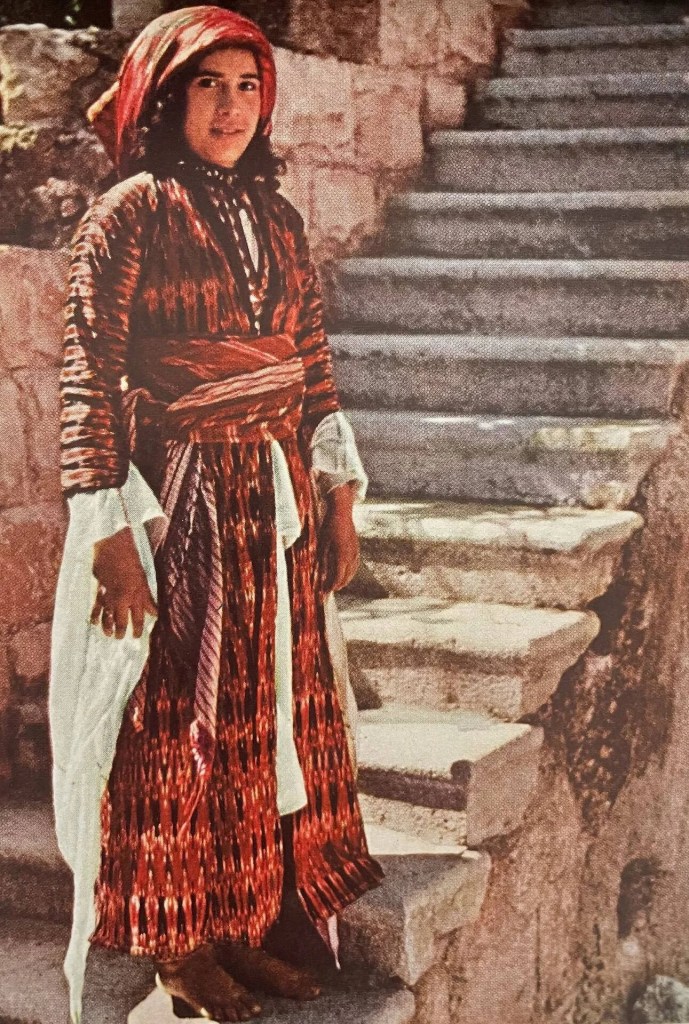
However, when we examine the Global North’s framing of the Middle East versus how much they take from these so-called war-torn states of oppression, the relationship can be seen as extremely extractive and borderline colonial. Although this piece is primarily focused on fashion and not politics, it would be truly inappropriate for me to ignore both the colonial relationship various Western powers have had with the Middle East and it’s wealth, and how to this day a vast majority of the violence that has ravaged this region has been caused or fuelled by Western political interests. And the reason this is essential to my examination of the Middle East’s relationship with the fashion industry is that prior to this current economic boom in the regional fashion market, the global climate has made it extremely easy for Western fashion houses to borrow extensively from the Middle East. This borrowing and borderline stealing from the rich textiles and culture of clothing in the Middle East has existed for centuries without giving any credit or allowing this region to reap the benefits. Moreover, what makes this extraction even worse is that it directly steals from areas that are dominated by Middle Eastern women such as the textile making and garment industry and completely takes away the agency and ownership of their craft. Instead, the quintessential Middle Eastern woman is always portrayed as a victim. Her Hijab is shown as a tool of oppression rather than a choice. In contrast, the Western fashion market will happily steal designs damningly similar to this cultural and religious garment and paint them as “Scandinavian scarves.” It is both insulting and extremely demeaning and this extraction has built up over the years due to the West’s historically extractive relationship with this entire region.
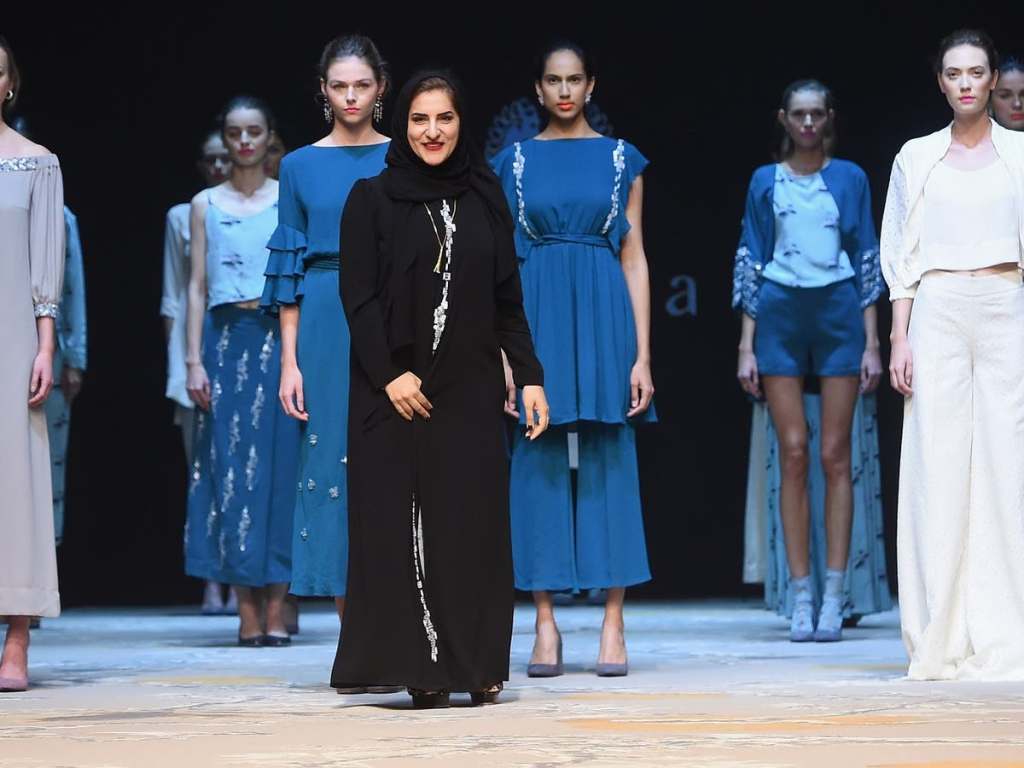
Despite all of this, the growth that the Middle Eastern fashion market has seen is a step in the right direction. We see a greater sense of ownership of the economic and cultural viability of fashion in the Middle East. This can be seen as the beginning of a reversal of the cultural erasure that has occurred both globally and in this case within the fashion industry. Aside from luxury brands opening flagship stories and investing in Arab nations, there is also a great boom and recognition of talent in the Middle East. With female designers and creatives like Sandra Mansour and Yasmine Yeya taking center stage, creative talent in the Middle East is finally gaining global recognition speedily over the last decade or so. This growth and recognition is monumentous for various reasons, however, the one that stands out to me the most is the beginning of reparations to a region that has been both misrepresented extensively and stolen from without being given its creative dues.
 cufashionsociety.com
Leave a comment