By Leah Goryachkovsky
Preface: Every niche tidbit and insightful piece of analysis was provided by the brilliant Kirstina Parsons. This article is simply a vessel for her thoughtfulness and my deep admiration for the exhibit.
After three visits to the Jewish Museum to swoon over the Mood of the Moment exhibit, I’ve officially declared myself captivated. On January 18th, I had the absolute pleasure of experiencing the exhibit for the fourth time with a walk-through and interview with Kristina Parsons, the Leon Levy Assistant Curator at the Jewish Museum. Her enticing research is centered around the exploration of design and how it intersects with culture, technology, and the twentieth century.
Before delving into the exhibit, I would like to provide some background on the space itself that helps to envision the significance of Mood of the Moment. The Jewish Museum was formerly the Warburg family home donated to the Jewish Theological Seminary (JTS.) The origins of the museum’s collection started in the library with a small accumulation of works. It was only after WW2 that the collection grew a robust contemporary program in the 1960s- coincidentally around the time Gaby Aghion started Chloé. As the exhibit is about the greatly influential fashion house of Chloé, the home becomes a very present element in how it displays clothing as though it was pulled from someone’s closet.
The exhibit is centered around amplifying the often unnoticed narrative of the founder and first designer of Chloé, Gaby Aghion. As stated in the exhibit, Gaby named her fashion house Chloé after a great friend because of her timeless and warm, feminine energy. Gaby Aghion aspired to create clothing to perfectly encapsulate ready-to-wear items, giving thoughtful consideration to the desired liberation from the constraints of couture in the 50s that women so desperately sought.
The free-flowing, playful essence of Chloé’s clothing transcends generations and is evident in the work of the brand’s renowned creative directors, who were mentored by Aghion. These visionary leaders, including Stella McCartney, Karl Lagerfeld, and Phoebe Philo, not only left their mark on Chloé but also went on to establish their own influential fashion houses. Aghion’s deliberate effort to nurture these designers aimed to empower them to make significant contributions to the industry. Central to Chloé’s ethos is the support of emerging artists, whose dynamic and provocative energy attracts a fresh audience. This commitment to uplifting young talent underscores Chloé’s enduring influence on the fashion landscape.
Walking Through the Exhibit
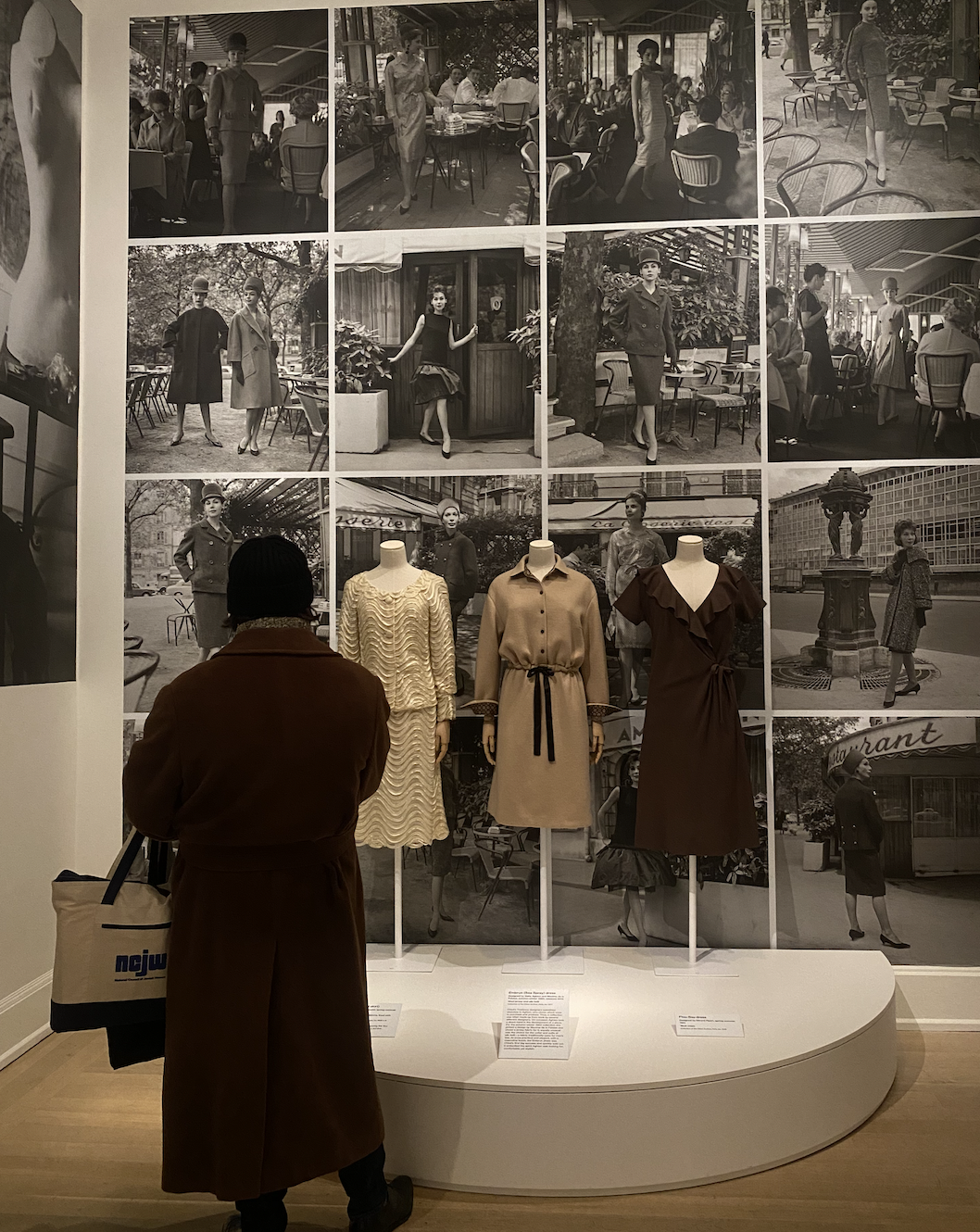
When you walk into the exhibit, a collage of images of models in Chloé is behind some of the last existing original garments from the first Chloé collection. These three dresses were beloved by French women in their day-to-day lives, as they allowed for the perfect balance between style and function. To truly highlight the fun memories, and lived-in and loved quality of the clothing, images of various French women are shown in the background to communicate to the viewer a sense of what it means to experience Chloé designs. The imagery was provided by Elle Magazine, a worldwide women’s magazine that offers a mix of fashion and beauty content, as well as society and lifestyle. The magazine was established in 1945 and started off by showcasing emerging women in post-war France. Shortly after, Aghion started her label, and the two companies forged a powerful relationship by bringing together a strong network of women. Chloé’s garments were featured over five hundred times in Elle Magazine.

Walking through the rest of the exhibit, there are distinctive details in the garments that are on the “if you know, you know” status, but luckily you have an in. As we move into the 60’s, the Chloé label becomes largely apparent in its appearance on the garment. The label is unique not only for its size, but also for existing in the first place. It was unheard of for fashion houses at that time to have their own label sewn into the garment. Rather, there would just be the label of the boutique that sold the garments and occasionally the label of the manufacturer.
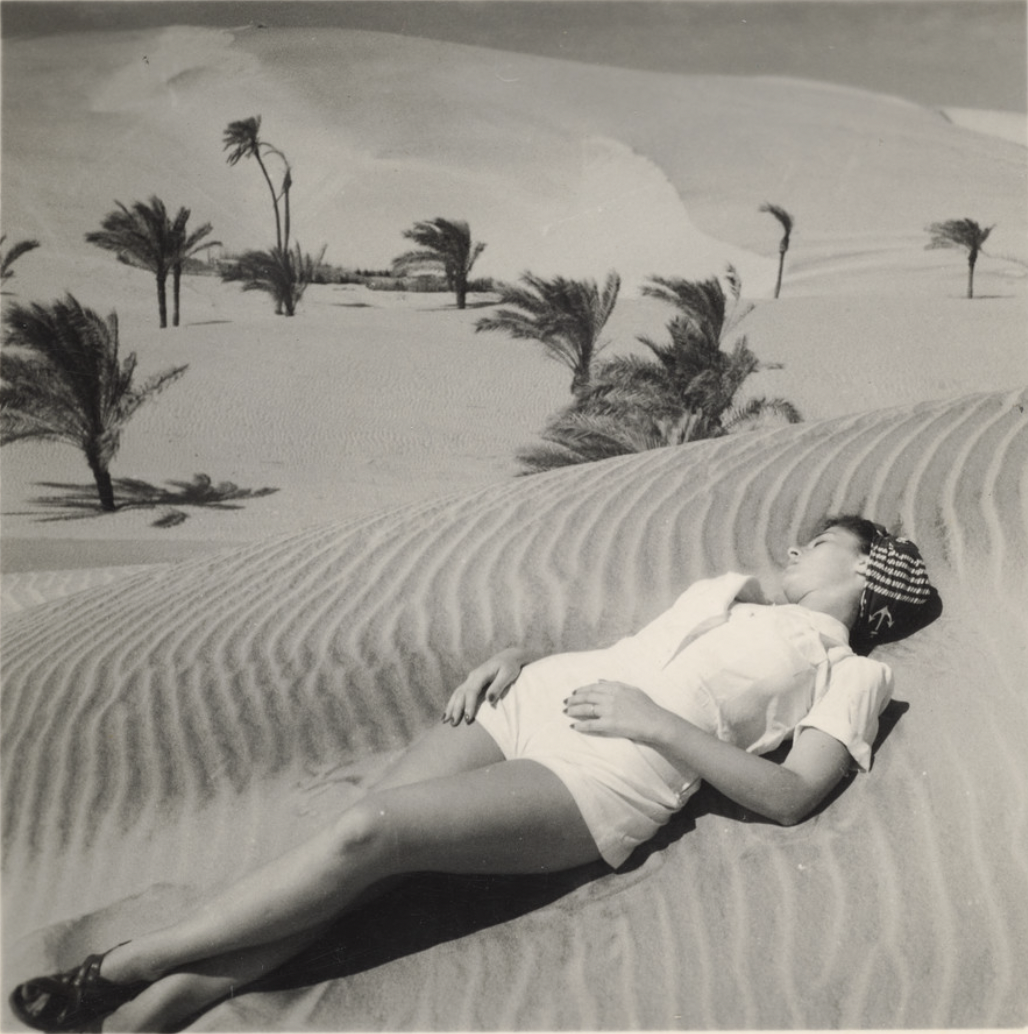

Another interesting feature of Chloé clothing is the conscious inclusion of various shades of beige. Before visiting the exhibit, I knew this to be a theme of the clothing because it is an homage to the free, bohemian spirit of the brand. Upon my visit to the exhibit and my newfound knowledge on Gaby Aghion, I discovered that the ubiquitous color scheme is also an homage to Aghion’s roots as an Egyptian Jewish woman. As stated in the exhibit, “…she typically wore a long black skirt with a silk blouse in one of her favorite shades of white, ivory, beige, or dusty pink- tones that reminded her of the Egyptian sand of her youth.” This cultural connection adds layers of meaning to Chloé’s designs, underscoring the brand’s ability to merge personal heritage with contemporary fashion trends. The versatility of the beige blouse, as showcased in the exhibit, reflects the enduring cultural impact of Aghion’s fashion house, inspiring reinterpretations and reinventions across generations.
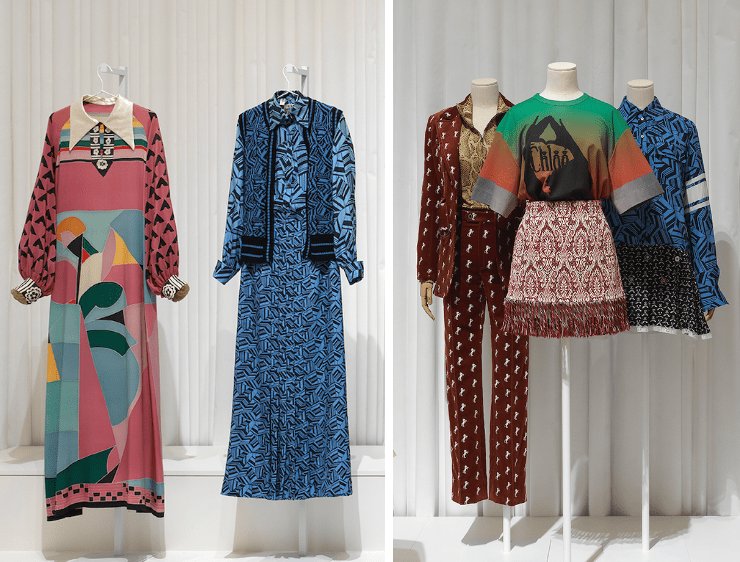
The commitment to preserving the essence of the brand and repurposing timeless designs is unmistakably evident in the images presented above. On the left, a design from the 1960s showcases a geometric pattern in blue and black, emblematic of Chloé’s aesthetic at the time. Fast forward to 2018, and we see a contemporary interpretation of the same pattern, reaffirming the brand’s dedication to its heritage while embracing modernity. This continuity not only highlights Chloé’s ability to adapt to evolving fashion trends, but also underscores its commitment to sustainability and responsible consumption. By reimagining vintage motifs and materials, Chloé demonstrates a thoughtful approach to design that minimizes waste and celebrates the enduring appeal of its iconic patterns. This seamless integration of past and present not only preserves the brand’s legacy but also reinforces its reputation for timeless elegance and innovation.
Considerations When Building Out Mood of the Moment
The act of curating an exhibit always varies amongst institutions, visions, purposes, and object types. Mood of the Moment is a chronological rendering of archival pieces that showcase the story of Gaby Aghion. With fashion being akin to sculpture, careful consideration was given to the placement of each piece, and curatorial choices were driven by conservation concerns, influencing decisions on hanging, draping, and stuffing for optimal presentation. Initially expecting more focus on Gaby Aghion’s personal narrative, the organizers identified the essence of her story and aimed to convey it through the available materials. Additionally, the majority of the exhibited works were sourced from Chloé’s archive, which was established in 2012 after old garments were unexpectedly discovered in the factory, providing a treasure trove of historical pieces for display.

The significance of hangers within the Mood of the Moment exhibit extends beyond mere utility, serving as subtle yet impactful elements that shape the viewer’s experience. Finding the perfect hangers to compliment the garments proved to be a challenge because most hangers claim to be ‘unisex,” yet are made for men and then marketed to women. The meticulous selection process to find the perfect hangers underscores their importance in the presentation of Chloé’s iconic pieces. By allowing viewers to observe clothing without ascribing a specific body type, these hangers facilitate a more inclusive and diverse perception of everyday fashion, emphasizing the versatility and accessibility of the showcased garments. Furthermore, the presence of clothing on hangers evokes the familiarity of a closet, tapping into viewers’ psychological associations with personal style and self-expression. Thus, beyond their functional role, the hangers contribute significantly to shaping the overall ambiance and immersion of the exhibit, enhancing the audience’s connection to Chloé’s timeless designs and ethos.
Mood of the Moment is presented in a chronological order, a stylistic curatorial choice that reflects a deliberate and insightful approach to storytelling. By consistently reflecting upon itself, the exhibit not only clarifies the brand’s timeline but also allows the complexities of Chloé’s evolution to emerge organically. This methodical arrangement enables the exhibition to effectively showcase the various designers who have contributed to shaping the brand’s identity over the years. Moreover, presenting the collection in chronological order enhances accessibility for visitors, providing a clear and coherent narrative that guides them through the brand’s journey from its inception to the present day. Thus, by embracing chronology as a guiding principle, the exhibition adeptly navigates through Chloé’s rich history, offering audiences a comprehensive understanding of its legacy and influence in the fashion industry.

Each item was displayed in front of a draped white background as a deliberate choice with several strategic purposes. To begin with, by opting for a simple, unadorned backdrop, the focus remains squarely on the original dresses themselves. This minimalist approach allows visitors to immerse themselves fully in the energy and essence of the works as they would have been experienced in their original context. Moreover, the use of Tyvek fabric for the backdrop adds another layer of significance. Tyvek, known for its durability and waterproofing properties, is commonly used for archival purposes, symbolizing the commitment to preserving and showcasing these historical garments for posterity. Thus, the juxtaposition of the understated white backdrop and the utilitarian Tyvek fabric not only enhances the visual presentation of the exhibit, but also underscores its archival significance, emphasizing the importance of preserving and celebrating the legacy of the showcased garments.

In conclusion, Mood of the Moment offers a profound exploration of femininity across different epochs, showcasing how Chloé’s designs reflect and redefine femininity in each era. Under the curatorship of Claudia Gould, the exhibit not only celebrates fashion but also delves into the broader cultural significance of design, incorporating perspectives from pioneering Jewish women like Helena Rubinstein. By presenting the collection chronologically, the exhibit effectively traces the evolution of Chloé’s aesthetic and ethos, allowing visitors to witness the brand’s transformative journey over time. The deliberate curation choices, from the meticulous selection of hangers to the strategic use of Tyvek fabric for the backdrop, enhance the immersive experience, underscoring the brand’s enduring legacy and cultural impact. Mood of the Moment serves as a testament to the visionary spirit of Gaby Aghion and her commitment to empowering women through fashion, resonating with audiences as a timeless ode to creativity, innovation, and self-expression.
 cufashionsociety.com
Leave a comment