by Eva Brander Blackhawk
Eva: What does fashion mean to you and how would you describe your personal style?
Calvin: Fashion has many meanings for me. I think that it operates as a non-verbal means of communication; the way we dress our bodies allows us to communicate in different ways. It’s a means of presenting ourselves to the rest of the world and the individuals we interact with. Our clothes cover the majority of our bodies, so they
have a significant impact on our overall look.
Our choice in clothing shapes our social interactions with others. I think that fashion serves a strong social aspect and influences others’ perception of us. It can affect how an individual appears, is perceived and is experienced by others. I think Erving Goffman’s view on self-presentation really explains it best; fashion is like a prop that is used by a performer in front of an audience. It’s a communication tool, used to manage others’ perception of us.
I don’t really know what my personal style is, I mostly just wear black clothing. I don’t think about what I wear too much to be honest.
Eva: Can you tell me a bit about where you’re from and how you got into fashion?
Calvin: I grew up on the Gold Coast in Australia, which is mostly just a tourist town and not known for fashion. So later I moved to Melbourne, to study fashion design at RMIT.
I didn’t get into fashion in the traditional way. I never had an interest in clothing while I was growing up, so I didn’t give much thought towards it. Then during my final year of high school, when I was totally lost on what I wanted to do, a Mastercard commercial showed up on television. It briefly mentioned some job occupations and one of them was for fashion design. At that moment I just thought: wow, that sounds really cool. It was something I had never heard of before. It hadn’t crossed my mind that there were people designing the clothes we wear. I did some more research about the role and decided: this is what I’m interested in, this is what I’m going to do.
Eva: What exactly is The Vanilla Issue? How did you come up with the name?
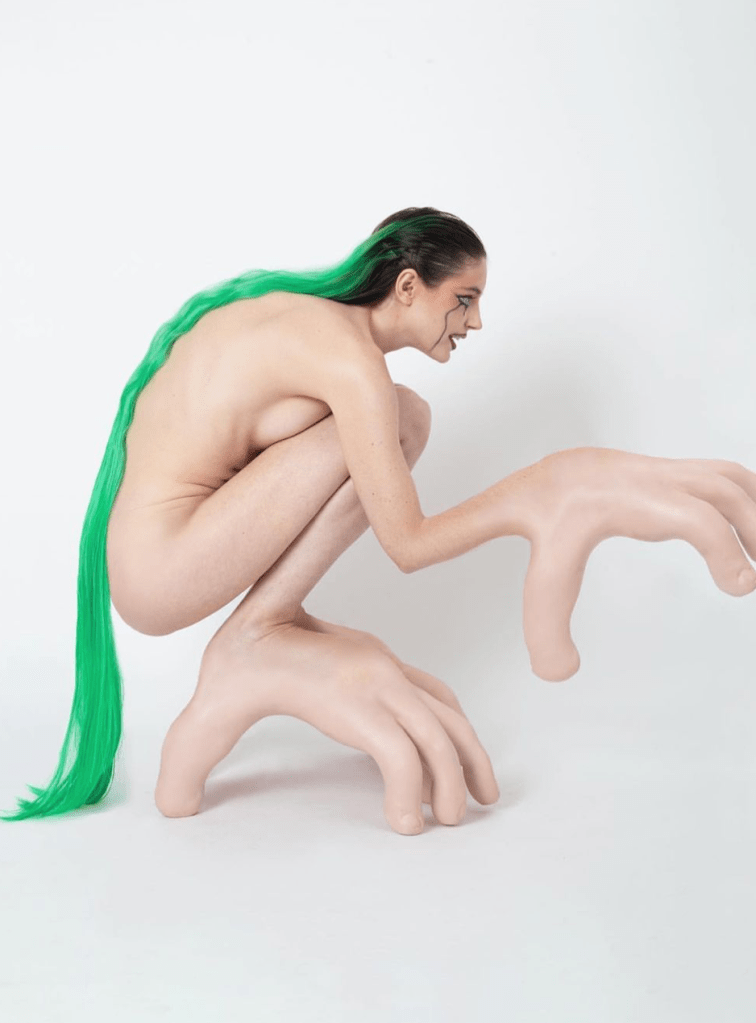
Calvin: The Vanilla Issue is a destination for people to discover the latest in fashion from graduates and emerging designers. The page is intended to showcase designers and help them to build a follower base. It’s often hard for designers to start their own brand and gain publicity, so the purpose of the platform is to try and light the
fuse and get the designers the publicity they deserve.
I thought it would be fun to call it The Vanilla Issue, because everything shared on the page is the latest on the fashion design scene. So I guess it’s an oxymoron; what the page features is anything but vanilla.
Eva: How would you describe your collective in three words?
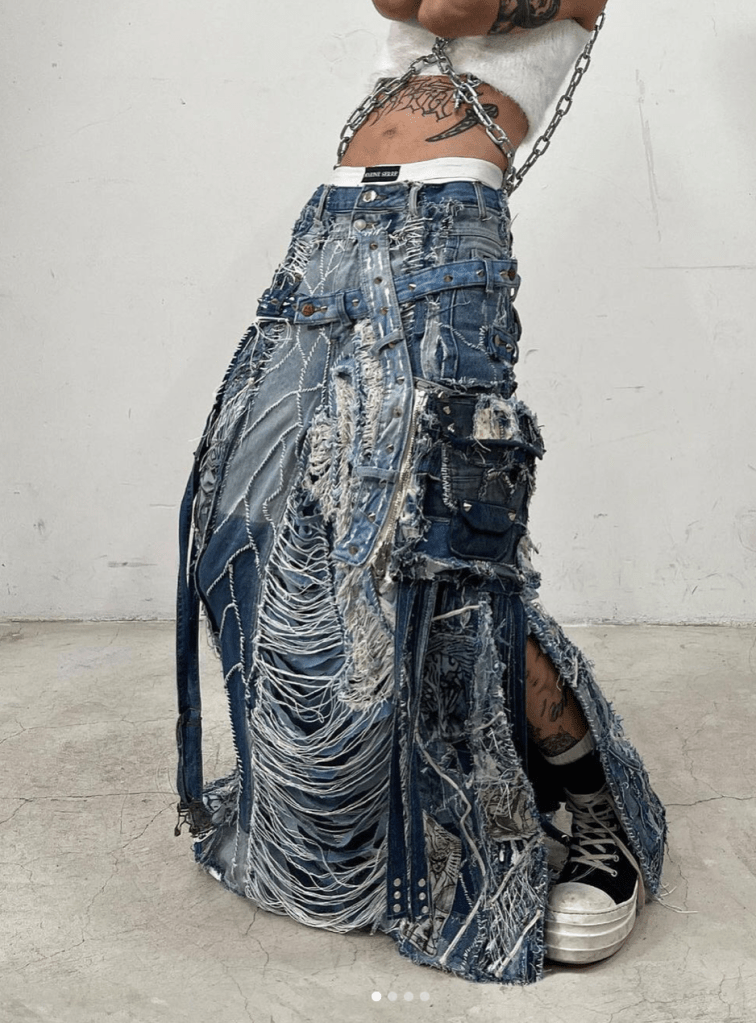
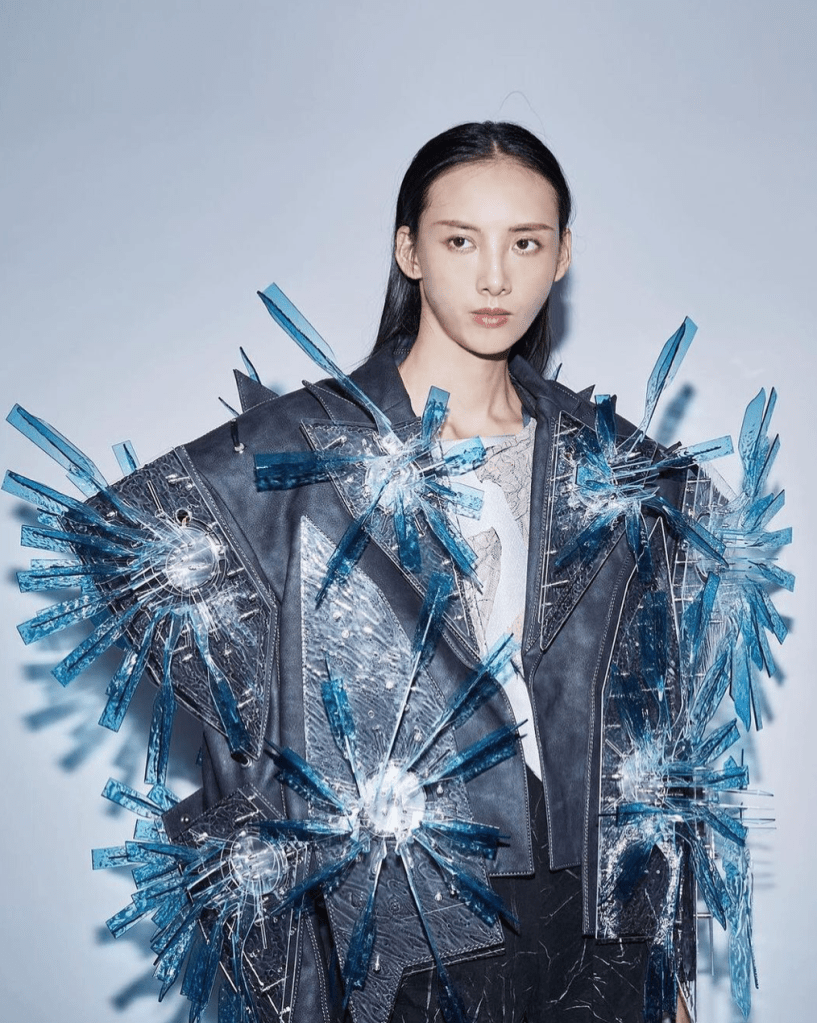
Calvin: Three words to describe the collective are: innovative, disruptive and unique. The designers featured on the page really encompass those three words.
Eva: Why did you choose to start the account anonymously and at which point did you decide to change that? How do you think your own identity influences your brand?
Calvin: I decided to remain anonymous early on, when I noticed my teachers and peers were following the account. I felt that it would influence their perception of me, if they knew the account belonged to me. It was only after I graduated that I decided to really focus on the page, which required me to share my identity. I think that my studies in fashion design opened my eyes to how difficult it is for designers when they start their own brand and try to gain that much needed initial publicity. My observations played a major role in starting The Vanilla Issue Instagram account (@thevanillaissue), because I wanted to help promote emerging designers. The page gives them a platform which they can use to share their work with a much larger audience, on a scale that is typically only available to larger brands.”
Eva: I absolutely adore your designs. I can see themes of bows, silkiness and some out-of-this-world fabric manipulation. Where do you draw inspiration for your own creative process?
Calvin: My graduate collection was heavily influenced by the Pattern Magic book series, by Tomoko Nakamichi. I have always been inspired by the simple elegant pattern pieces in her books and the unique forms that they create. When creating my collection, I wanted to construct a garment that did not require any additional hardware such as zippers or buttons, to fasten the garment to the body. I approached the design process through patternmaking, experimenting with incorporating bows into the pattern of the garment. The resulting
bows were decorative in appearance as they created a gathered look. At the same time, the bows served the functional purpose of fitting the garment to the body of the wearer.
Eva: How do you choose what to feature on the account?
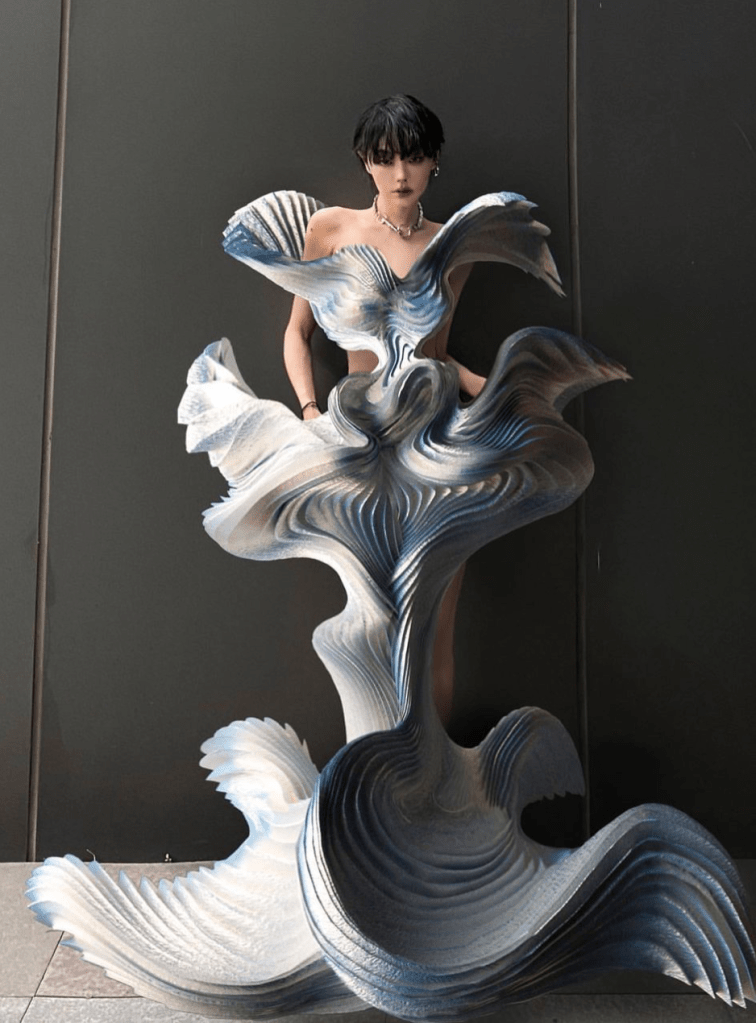
Calvin: The majority of the designers featured were found using our hashtag #thevanillaissue, in addition to photo tags and direct email submissions. We get a lot of submissions and try to feature as many aspiring designers as possible, because they need the most exposure. We typically look for work that is unique and interesting,
which we believe will do well on the page.
Eva: It seems like The Vanilla Issue has a unique place at the forefront of fashion. Can you tell me your opinion on the importance of futurism in fashion?
Calvin: The advent of social media has given emerging designers a platform with a reach that has never before existed for smaller brands. I think that this is an exciting time in the fashion space, because we are seeing a lot of new designers shoot up into the spotlight with unique and interesting designs and it’s thanks to social media. It has also pushed young designers to really innovate and think outside of the box. To think of clothes as more than just aesthetic pieces, rather as items that hold meaning.
Eva: Where do you see your work going – are you working on anything new right now?
Calvin: We are working on creating a much more sustainable business model for The Vanilla Issue, so that we can continue to grow and support designers in the future. We hope to grow the page into a much larger platform that offers a diversified range of services, with a focus on support for designers.
 cufashionsociety.com
Leave a comment