Periwinkle reminiscent of the glistening Atlantic ocean, pink suggestive of a flamingo’s feather, peach evocative of those brilliant summer sunsets—what unites these colors?
South Beach, Miami.
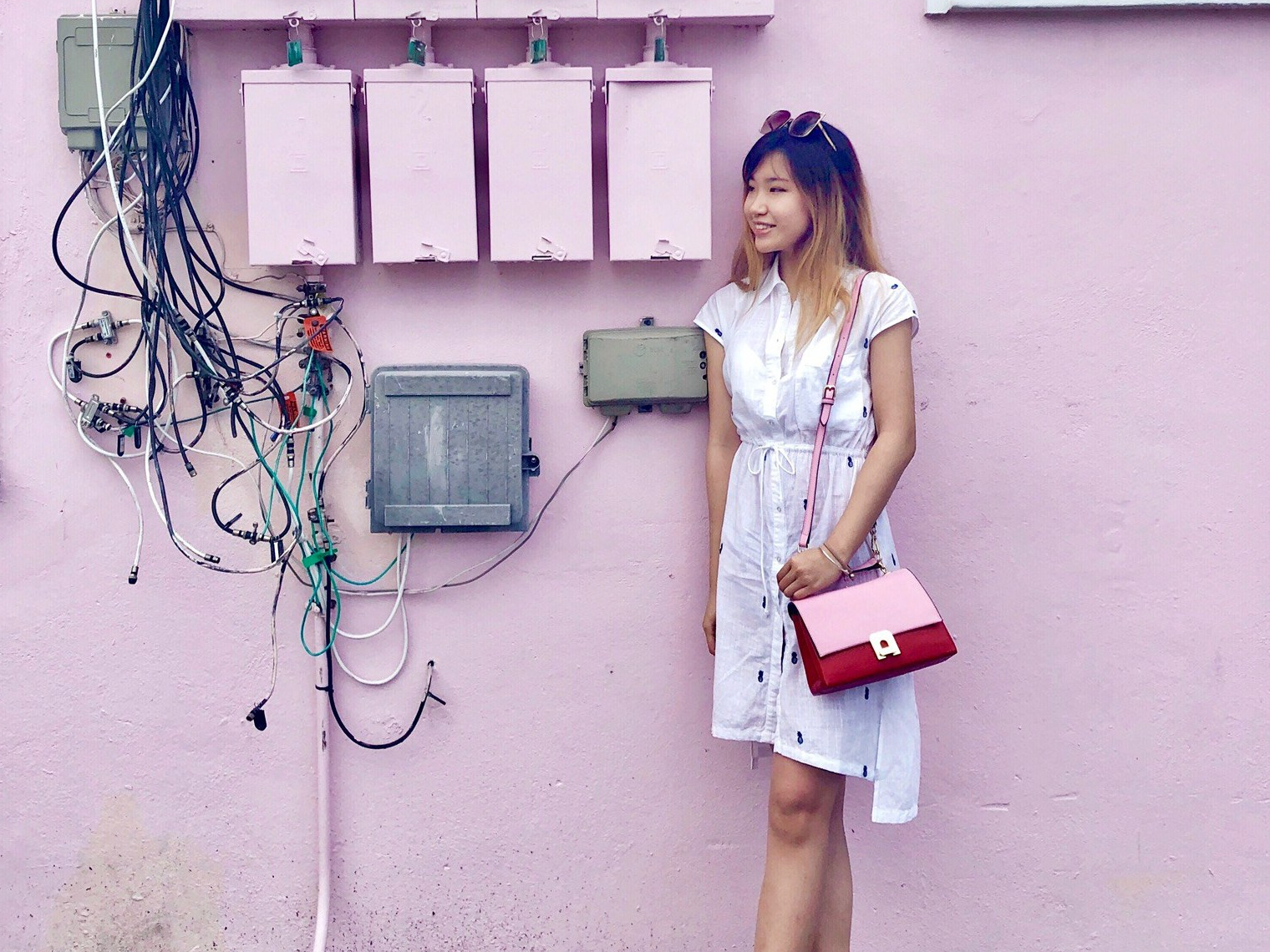
While Eugenia toured Paris, our Director of Finance Michelle sailed to South Beach, Miami for spring break and was promptly wowed by the splashes of colors in every nook and cranny. The tangles of wires and electrical boxes that hang on this rose-colored stucco wall demonstrate the integration of the town’s art deco glory into everyday life.

But how did South Beach become this way?
South Beach’s colorful exterior and architecture can be traced back to the 1920’s and 1930’s, when the Art Deco movement surged throughout cities. Architecture of this style are characterized by curved structures breaking up rigid, rectangular forms. These buildings are accented with vibrantly colored ornamentation reminiscent of the sun, the ocean and other natural elements. It was during this time when South Beach saw hustle and bustle as the wealthy, and their glitz and glam, flooded the town.
The construction of Eden Roc and Fontainebleau in north Miami, however, contributed to South Beach’s decline, with celebrities and the elite flocking to these hotels. Crime and decay were rampant in the town from the 1950’s onwards—but some refused to believe South Beach’s heyday was truly over.
The artists at the forefront of reviving South Beach to pastel paradise? Leonard Horowitz and Barbara Capitman.

Inspired by the brilliant colors that come within natural settings such as sunrises, sunsets, beaches, and more, Horowitz came to Miami from New York City in the early 1970’s. He used what would become a palette of 40 colors to colorize the true architectural mood and integrity of half of South Beach‘s dull buildings. In doing so, Horowitz created a unified and cohesive streetscape teeming with history and culture.
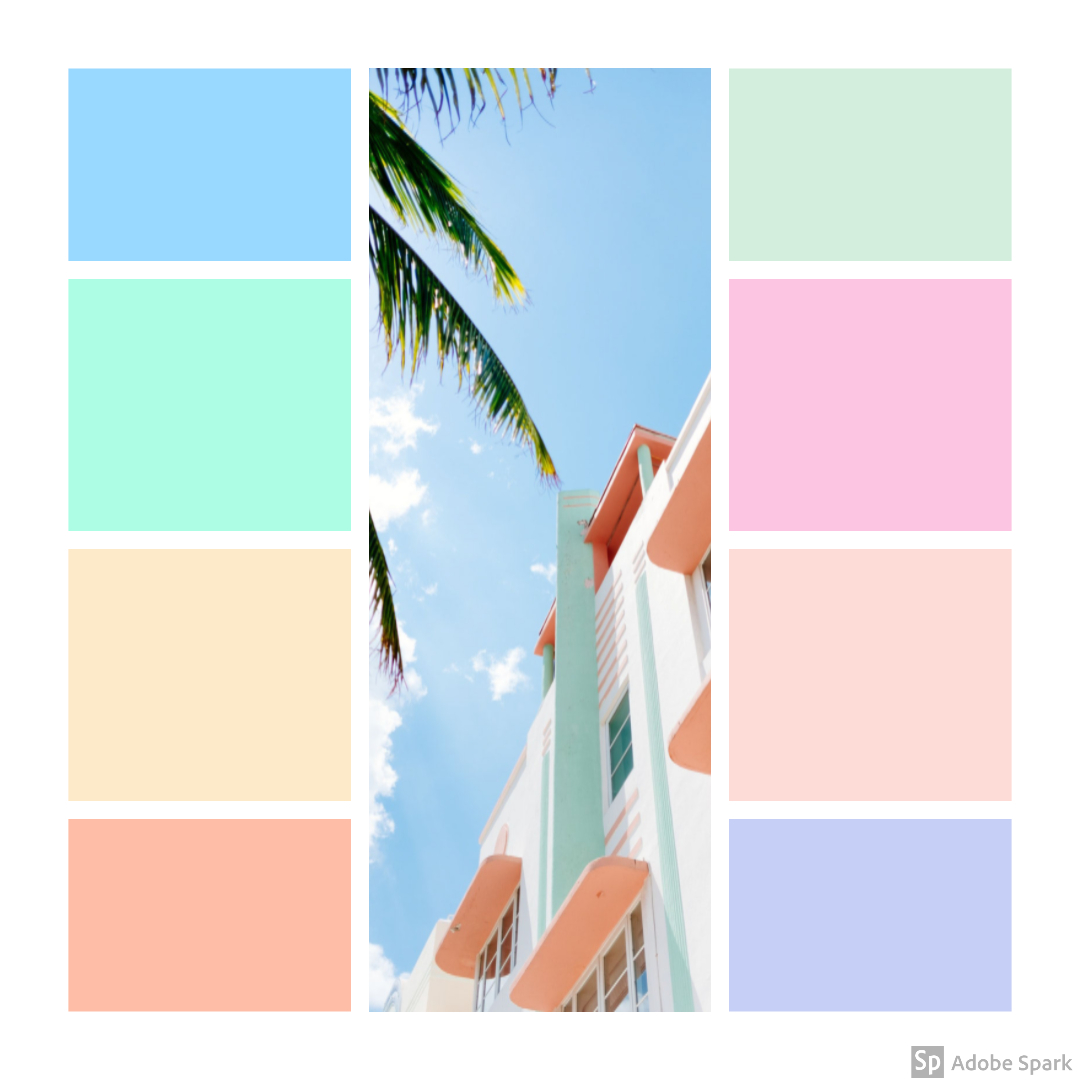
Partnering with Horowitz, Barbara Capitman and her son in turn formed the Miami Design Preservation League in 1977. But the non-profit goes beyond maintaining South Beach’s topical beauty; it seeks to preserve the town’s historical and architectural significance. In fact, Capitman’s commitment to tangible results led to South Beach’s status as the first 20th century district recognized by the National Register of Historic Places.
The Art Deco movement is still alive and well, flourishing not only through buildings and skyscrapers but also through fashion. South Beach buildings like the Park Central Hotel, the Webster, and many more wouldn’t be recognizable today without its trademark pastels and unique architecture. With the help of Horowitz, Capitman, residents, and countless other artists and designers, South Beach has and will maintain its charm for years to come.

_Park_Central_(1937).jpg)
 cufashionsociety.com